Some days, you wake up with no motivation to do anything, and everything feels heavier than it should.
Nothing terrible has happened. The room is quiet. The day is waiting. There are things you could do, maybe even things you wanted to do, but your body feels still and your mind feels crowded already.

A message to answer. A cup to wash. A plan you once felt excited about. Even the small things seem to stand in front of you with their arms crossed, asking for more energy than you have.
And then the thought comes:
Why do I have no motivation to do anything?
The answer is not always laziness.
Often, motivation disappears because your mind and body are tired, overwhelmed, or emotionally drained. Motivation is not just a bright feeling that appears because you care enough. It is connected to your energy, your emotions, your stress, and how much pressure you feel when you try to begin.
That means you do not always need a bigger push.
Sometimes you need a smaller, softer way to start.
What Motivation Really Is
Motivation is often described as if it is a strong burst of energy that suddenly arrives and pushes you into action. But real motivation is usually much quieter than that.
At its simplest, motivation is the reason you take action. It helps explain why you start something, keep going, avoid something, or come back after stopping. It gives your behavior direction.
But motivation is not only about wanting something.
You can want a calmer routine, a cleaner space, a finished project, a healthier body, or a more creative life and still feel unable to begin. Wanting something and having the energy to start it are not the same thing.
That difference matters.
Because when you have no motivation to do anything, it can quickly turn into self-blame. You may think, If I really wanted this, I would just do it.
But that is too simple. And honestly, it is not very kind.
Motivation does not live in a separate little box away from the rest of your life. It is affected by tiredness, stress, emotions, pressure, mental noise, and the amount of energy you have left at the end of the day.
Research on motivation* has moved beyond the old idea that we act only because we want to remove discomfort, like hunger, thirst, or tension. Berridge explains* that motivation also depends on whether something feels attractive, valuable, or worth moving toward. That matters here because motivation is not only about escaping a bad feeling. It is also about having something gentle enough, safe enough, or meaningful enough to pull you forward.
So instead of seeing motivation as something you either have or do not have, it may be more useful to see it as something that changes.
Some days it feels close.
Some days it feels buried under everything you have been carrying.
That does not mean it is gone forever. It means you may need a gentler way back into action.
Intrinsic vs. External Motivation
One helpful way to understand motivation is to look at the difference between intrinsic motivation and external motivation.
Ryan and Deci explain this through Self-Determination Theory**, which looks not only at whether a person is motivated, but at the quality of that motivation. This matters because doing something from interest, meaning, enjoyment, or a sense of personal choice feels very different from doing it only because of pressure, reward, punishment, or someone else’s expectation. In their work, intrinsic motivation refers to doing an activity for its own sake, because the activity itself feels interesting, enjoyable, or personally satisfying. External motivation, on the other hand, is connected to a separate outcome, such as praise, approval, avoiding guilt, or reaching a result.
Self-Determination Theory** makes a helpful distinction here. It does not only ask, “Are you motivated?” It also asks, “What kind of motivation is this?” That matters because doing something because it feels meaningful, enjoyable, or personally satisfying is very different from doing it only because you feel pressured, judged, rewarded, or afraid of falling behind.
If you feel motivated only when you are trying to keep up, avoid guilt, impress someone, or prove that you are productive enough, even something you once enjoyed can start to feel like another demand.
And when that happens, you may start avoiding it.
Not because you stopped caring, but because it no longer feels peaceful. It feels like one more thing watching you from the corner of the room.
Pressure can drain the gentle motivation that made you want to begin in the first place.
You may think you need more discipline, but sometimes what you really need is to reconnect the activity with safety, comfort, and calm.
Intrinsic motivation sounds more like:
“This feels good to my hands.”
“I like seeing a small piece grow.”
“This gives me a quiet moment.”
“I do not have to prove anything here.”
“I can do this slowly.”
That kind of motivation may not be loud, but it is often more sustainable.
Why Motivation Disappears
Motivation often disappears when life becomes too full, too loud, or too emotionally expensive.
Sometimes it fades because you are physically tired or because you are mentally overloaded. Sometimes your mind has simply been holding too many things for too long.
Work. Family. Money. Chores. Messages. Decisions. Plans. Worries. Things you forgot and things you still need to do. Things you feel guilty about not doing yet.
It is a lot.
And when your mind is carrying that much, even something pleasant can feel like another task.
It can feel a little like carrying a full laundry basket through the house.

At first, one more small thing does not seem like much. One sock. One towel. One shirt. But when the basket is already heavy and pressed against your body, even one more piece can feel like too much. Not because the sock is heavy on its own, but because you are already carrying all you can.
Motivation can feel the same way.
The thing you want to do may not be hard by itself. But if your mind is already full of stress, decisions, guilt, noise, and tiredness, even a small beginning can feel heavier than it really is.
This is why having no motivation to do anything can feel so confusing. You may avoid not only difficult things, and also avoid things you actually like.
You may want to start a creative project, go for a walk, make something nice, clean a small corner, or spend ten quiet minutes with yourself. But instead, you freeze, scroll, postpone, or tell yourself you will do it later when you feel more ready.
Maybe you even have the materials ready. The idea is there. The desire is there. But the small bridge between “I want to” and “I’m starting” feels strangely hard to cross.
That does not mean you are lazy.
A person can look functional on the outside and still feel deeply tired inside. You can answer messages, take care of responsibilities, show up for other people, and still have very little energy left for something that belongs only to you.
Motivation can also disappear when the beginning feels too big.
If a project has become a whole finished result in your mind, starting can feel impossible. You are not thinking about one small step anymore. You are thinking about the whole thing: the time, the decisions, the possible mistakes, the unfinished parts, and the fear that you will start and stop again.
That is a lot of weight to carry before you have even begun.
Guilt makes this even harder.
When you feel guilty for resting, guilty for being behind, or guilty for not doing enough, your mind does not feel safe. The activity becomes connected to self-criticism.
Instead of feeling like something gentle, it starts to feel like proof that you are failing.
And when something feels wrapped in guilt, the mind often avoids it.
The Role of Energy and Emotions
Motivation is not just a mindset. It is deeply connected to energy and emotions.
This matters because it changes how you see your lack of motivation.
You cannot separate motivation from how rested, safe, focused, and emotionally available you feel. When your energy is low, your mind naturally tries to protect what is left. It may pull you toward the easiest relief, even if that relief does not truly restore you.
That is one reason your phone becomes so tempting.

Scrolling asks very little from you at first. Just a thumb moving across a screen. A quick distraction. A little escape from the pressure in your head.
But scrolling often leaves you just as tired, or even more scattered. You went there for rest, but somehow your mind comes back noisier.
Emotions also change how hard something feels.
A small task can feel simple when you are calm and rested. The same task can feel enormous when you are anxious, tense, sad, overstimulated, or mentally full.
The task did not change. Your capacity changed.
Emotional tiredness matters because it changes what you feel able to do. If you have spent the whole day managing other people’s needs, making decisions, worrying quietly, or pretending you are fine, it makes sense that you may not have much energy left to begin something, even something beautiful.
It is not only about time.
Many people technically have ten minutes. But having ten minutes and having the emotional space to use those ten minutes are not the same thing.
Harsh advice often fails for this reason.
“Just do it.”
“No excuses.”
“Be disciplined.”
“Push through.”
These messages assume the only missing piece is willpower. But for someone who is overwhelmed, the problem is often not a lack of desire. The problem is that the body and mind are already carrying too much pressure.
A gentler approach works better because it lowers the emotional cost of starting.
When the first step feels small, safe, and allowed to be imperfect, beginning becomes easier. Not because you forced yourself harder, but because beginning no longer feels so threatening.
Why Waiting for Motivation Does Not Work
Waiting for motivation may sound reasonable, but it often keeps you stuck.
Motivation does not always come before action. Very often, motivation grows after you take a small action.
You do one tiny step, and your mind gets a little evidence that the task is possible. First you begin for two minutes, and the resistance softens. You open the notebook, wash one cup, step outside, touch the yarn, make one row, and something shifts slightly.
Not dramatically. Not perfectly. But enough to make the next step feel less impossible.
If you wait until you feel fully ready, fully inspired, fully rested, and fully confident, you may wait a long time. Life rarely creates perfect inner conditions before you begin.
And if your mind is already tired, “waiting until I feel ready” can quietly become “waiting forever.”
But this does not mean you should force yourself into a big action.
That is where many people get it wrong. They hear “do not wait for motivation” and turn it into pressure. They think they need to push harder, perform better, finish everything, or become a different person overnight.
That is not the point.
The point is to make the first action small enough that it does not require a huge amount of motivation.
You are not trying to climb the whole mountain. You are only trying to put one foot on the path.
A small beginning changes your relationship with the task. Instead of seeing it as something huge waiting to judge you, you experience it as something you can touch lightly.
You do not need to finish or to prove anything.
And you do not need to feel excited.
You only need to create one tiny moment of contact.
This makes motivation feel more realistic. It stops being something you wait for and becomes something you gently build.
How Crochet Can Gently Support Motivation
Crochet can support motivation because you do not have to begin with a big project.
It can begin as one small, calming action.
For someone who feels overwhelmed, crochet can become more than a hobby. It can become a quiet ritual that helps the mind settle. The repeated movement is soothing. The hands have something simple to do. Each stitch creates a small sense of order. The yarn gives the body something soft and real to focus on.
Slowly, the mind can move away from the noise of the day and into the rhythm of the present moment.
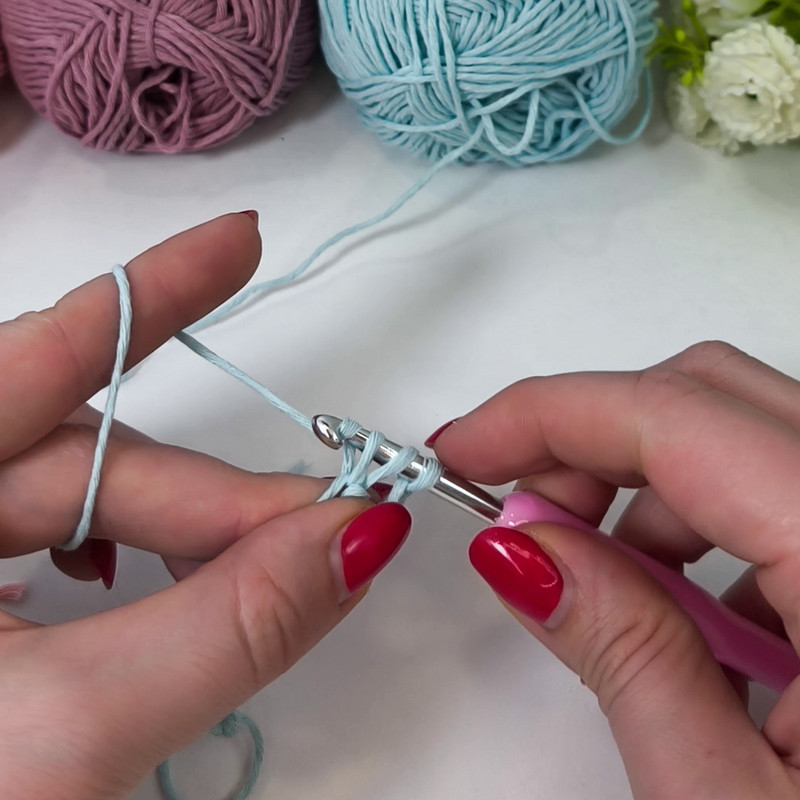
This is why ideas like crochet for anxiety, calming crochet, mindful crochet, crochet for overwhelm, and crochet for stress relief naturally connect to motivation. Not because crochet magically fixes low motivation, but because it lowers the pressure around starting.
It gives you a way to begin without needing to perform.
When you have no motivation to do anything, a full project may feel too much. But touching the yarn, choosing a color, making a small chain, or doing one row may feel possible.
And possible matters.
Possible is the doorway back.
Crochet can also help because it lets you see gentle progress. A few stitches become a small line. A few rows become a small shape. You can see that your hands did something.
When you feel stuck, this small proof can matter. It reminds you that movement is still available, even if it is slow.
Making something with your hands can also feel comforting. So much of modern life happens in the mind or on a screen: thinking, planning, comparing, reading, scrolling, replying, worrying.
Crochet brings attention back into the body.
You feel the yarn between your fingers. The small movement of the hook. The quiet repetition of one stitch after another.
It gives your mind a softer place to land.
But crochet should not become another standard you have to meet. That would miss the whole point.
It does not need to become a finished blanket, a perfect gift, a social media post, or proof that you are creative enough.
Sometimes crochet matters because it gives you ten quiet minutes and it keeps your hands busy while your thoughts soften.
Sometimes it matters because one small row helps you feel less lost in the day.
That is enough.
A Smaller Way to Begin When You Have No Motivation to Do Anything
If motivation feels far away, the answer is not always a bigger reason, a stronger plan, or a better version of yourself.
Sometimes the answer is to make the beginning smaller.
You do not need to promise yourself that you will finish the project or to decide that today will be the day you change everything. You do not need to turn a quiet creative act into a test of discipline.
If you are new to crochet and want a simple place to start, this beginner crochet guide can help you take your first step without feeling overwhelmed.
You can simply begin with one small movement.
One row.
Ten minutes.
Choosing the yarn.
Preparing your hook.
Looking at an easy crochet pattern without starting it yet.
Making a chain and stopping there.
From the outside, this kind of beginning may look too small. But from the inside, it can be meaningful.
It says:
“I am allowed to return slowly.”
“I do not need a huge amount of motivation to care for myself.”
“This moment counts, even if it is small.”
Motivation does not always arrive as a strong feeling. Sometimes it begins as permission.
Permission to: start gently, do less than you expected, enjoy something without turning it into a performance, come back without explaining why you stopped.
So if you have no motivation to do anything today, maybe the first step is not to force yourself into more pressure.
Maybe the first step is to choose something small enough to feel safe.
And if that small thing is one quiet row, one soft color, one simple stitch, or one peaceful pause with your hands, that can be enough for today.
Notes:
* Berridge, K. C. Article on motivation, drive theory, and incentive motivation. Frontiers. https://www.frontiersin.org/journals/psychology/articles/10.3389/fpsyg.2018.01647/full
** Ryan, R. M., & Deci, E. L. Article on Self-Determination Theory, intrinsic motivation, and extrinsic motivation. ScienceDirect. https://www.selfdeterminationtheory.org/SDT/documents/2009_RyanWilliamsPatrickDeci_HJOP.pdf