Category: Uncategorized

  • Crochet to Reduce Overwhelm: A Quiet Way to Calm Your Mind

    Crochet to Reduce Overwhelm: A Quiet Way to Calm Your Mind

    Crochet to reduce overwhelm might sound too simple to work.
    But when your mind won’t slow down, simple is exactly what helps.

    You’re not overwhelmed because you have too much to do.
    You’re overwhelmed because your mind never gets a real break.

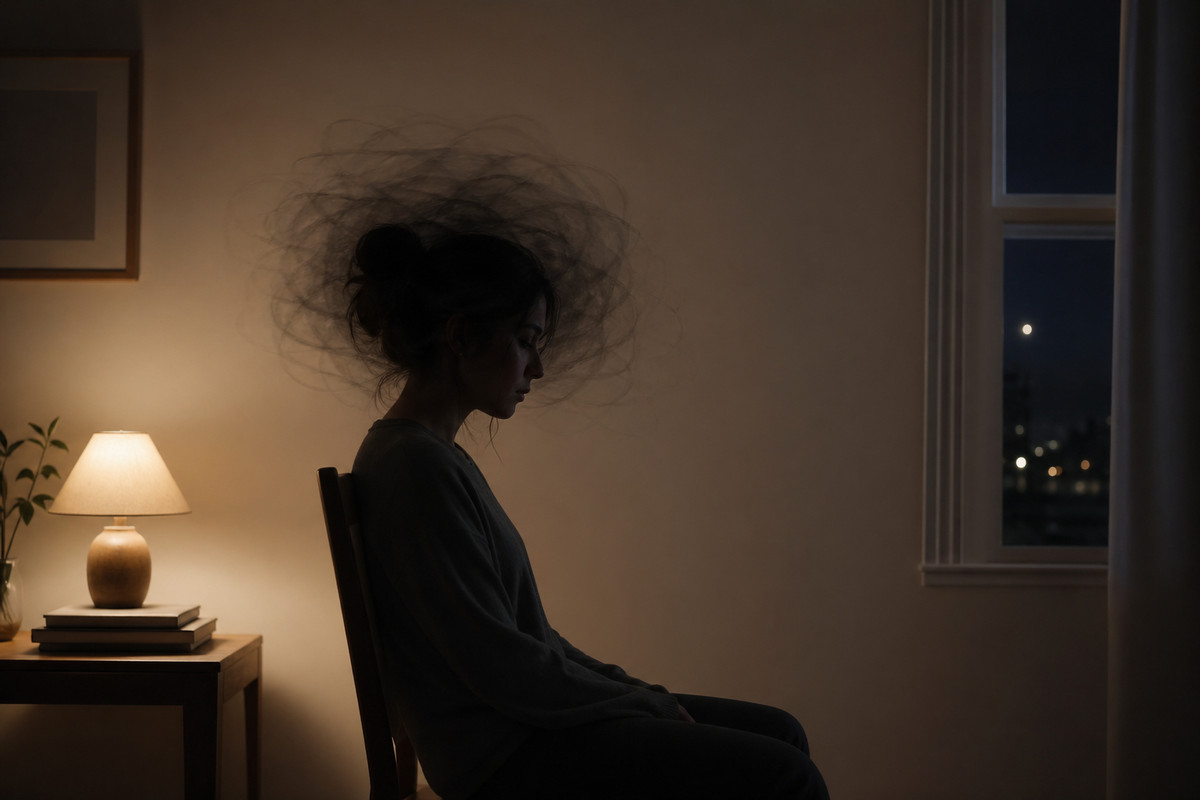
    You finally sit down… your shoulders sink into the chair.
    And for a second, it looks like rest.

    But your mind? Not even close.

    It keeps going.
    What’s left. What’s next. What you forgot.
    It hums quietly in the background, like a fridge you didn’t notice until the room got still.

    After a while, you start wondering if something’s wrong with you.
    Like… shouldn’t you be able to handle this better by now?


    Quick check

    Don’t overthink this. Just notice what hits.

    Do you finish things, but your mind keeps going anyway?
    Do you try to rest, but still think about what you should be doing?
    Do you feel guilty when you’re not being productive?
    Do you tell yourself you just need to organize better (again)?
    Do you avoid starting small things because they won’t be “perfect”?
    Do you feel tense even when everything looks fine from the outside?
    Do you feel like you don’t need more advice — just a quiet mind?

    If you caught yourself nodding even once… yeah. This is you.


    What’s actually happening

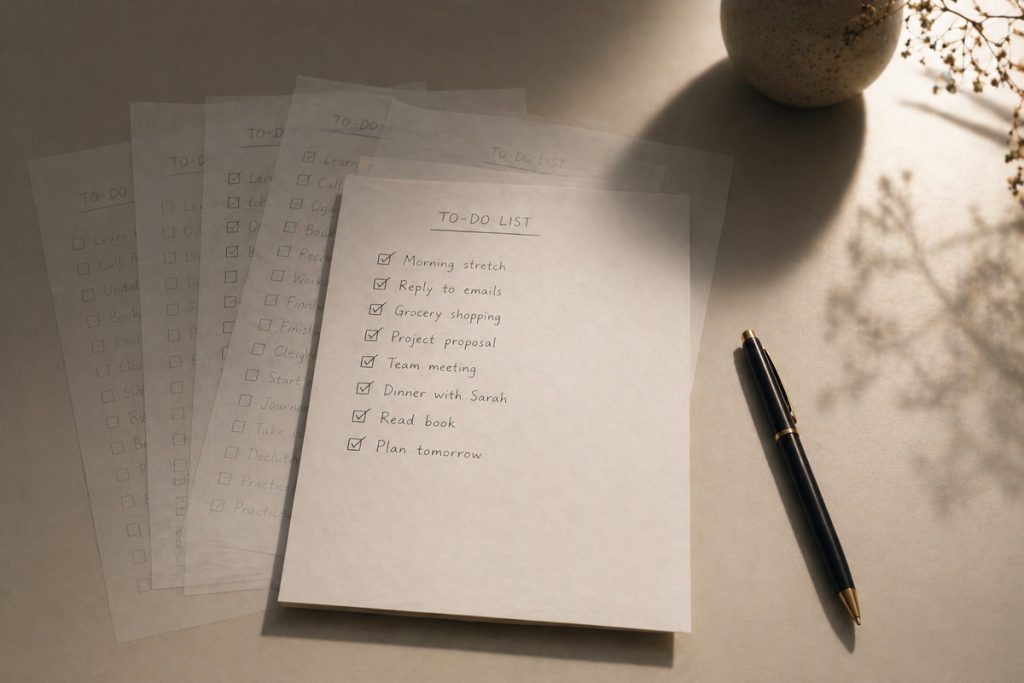
    It’s not your to-do list.

    Nothing ever feels finished in your head.

    You complete something… and your brain immediately pulls up the next thing.
    No pause. No “good job.” No “you can stop now.”

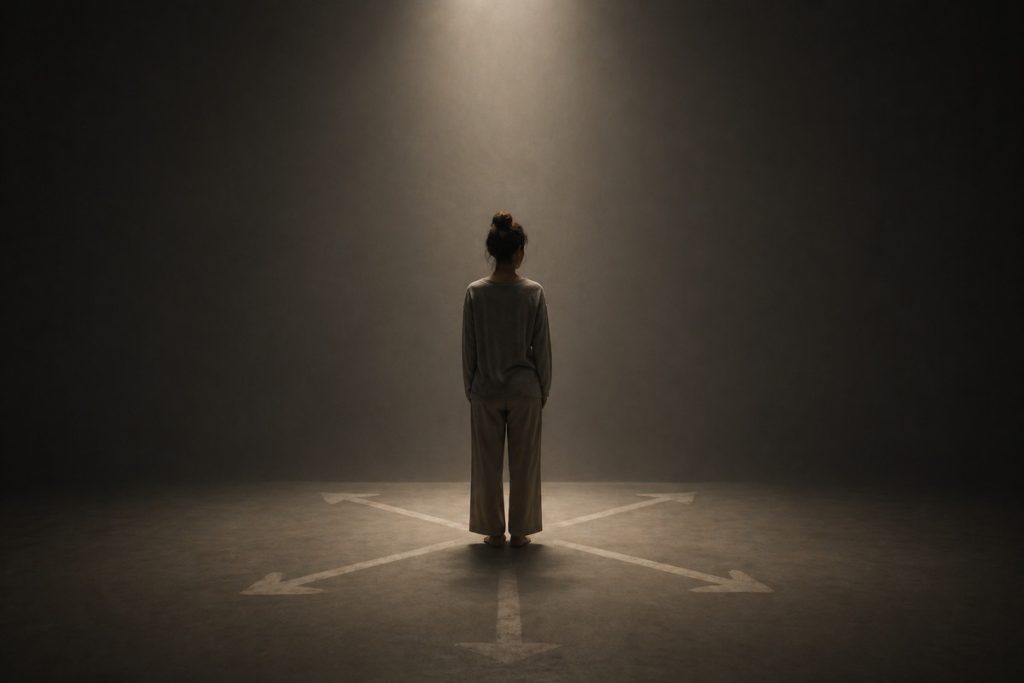
    It’s like finishing a task, but no one ever says you’re done.
    So you just stand there, waiting for the next instruction — even when there isn’t one.

    Of course your mind stays on.
    It never got permission to turn off.

    That’s not you failing.
    That’s just how your brain is trying to keep up.


    Why rest doesn’t really work

    You try, though.

    You sit down. You scroll. You lie in bed and stare at the ceiling like it might give you answers.

    But your mind keeps going behind the scenes.

    You replay conversations.
    You plan tomorrow.
    You fix things that didn’t even happen yet (very productive, by the way).

    Your brain is trying to close all those open loops.

    So when you get up, you’re still tired.
    Not the “I need sleep” kind — more like a heaviness behind your eyes.

    Then comes that familiar thought:
    “I just wasted time.”

    You probably even tell yourself you’ll “just rest for a minute”—
    and then spend that minute arguing with your own thoughts instead of actually resting.

    So you go back to doing.

    Not because you want to.
    But because sitting in that mental noise feels harder.


    Where crochet fits (and why this feels different)

    You don’t need another task.
    Honestly, you’d probably like to return a few.

    This is different. This is where crochet to reduce overwhelm starts to make sense.

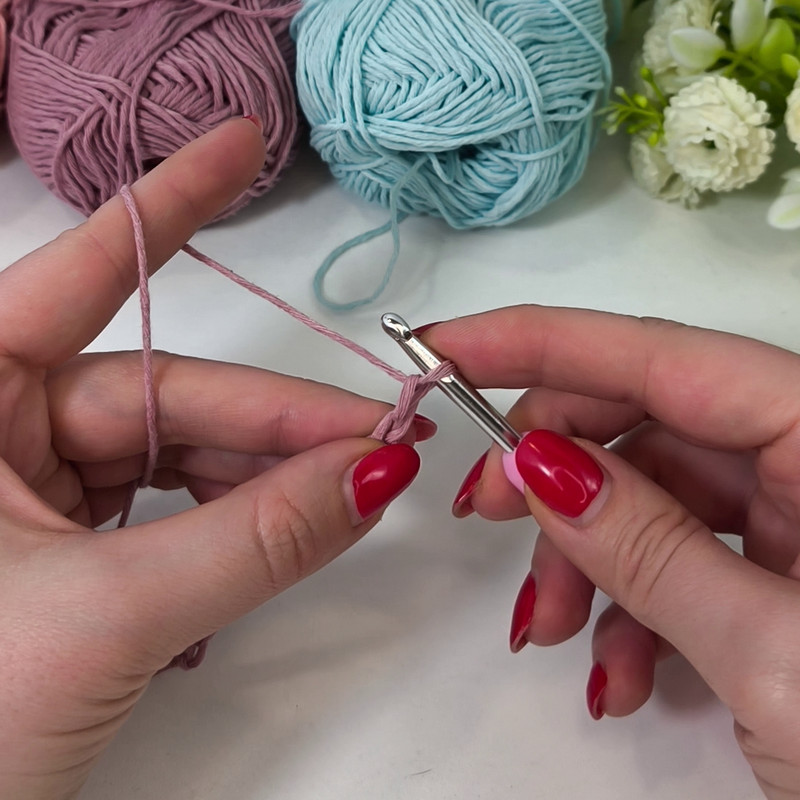
    Crochet gives your hands something small and steady to do.
    And that matters more than it sounds.

    When your hands repeat one simple movement, your mind has less space to jump all over the place.

    It’s like having ten tabs open in your head, all making noise at once.
    Crochet doesn’t slam them shut.

    It just opens one quiet tab… and the rest slowly fade into the background.

    You’re not forcing yourself to relax.
    You’re just… not feeding the chaos.

    Same movement. Again and again.
    Yarn sliding softly through your fingers.

    Nothing urgent. Nothing to prove.

    For a moment — a small one, but real — your mind has somewhere to land.

    If you’re just starting, a simple beginner crochet pattern is more than enough.


    How crochet to reduce overwhelm actually works

    Your brain is constantly scanning.
    What’s next? What’s wrong? What’s unfinished?

    Repetition changes the pace.

    When you do the same simple movement, nothing new is happening.
    There’s nothing to solve and nothing to fix.

    So your system slowly stops acting like everything is urgent.

    Your attention shifts — not because you force it, but because your hands are busy doing something calm and steady.

    That’s why people often feel better after crocheting.
    Not because they ran away from their thoughts…
    but because the thoughts finally slowed down enough to breathe.

    Research shows this too*. People report feeling calmer, lighter, and more stable after crocheting. Their mood improves.

    That’s the real power of crochet to reduce overwhelm — not escape, but softening.


    A small start (that’s all this is)

    You don’t need more time.
    And you don’t need to do this “right”.

    This is not about becoming good at crochet.

    This is about giving your mind a moment where it doesn’t have to carry everything.

    Five minutes is enough.
    Messy stitches? Also fine.
    Stopping halfway? Completely allowed.

    You’re not building something perfect here.

    You’re giving yourself a small, quiet pause.
    The kind your mind has been asking for… just not very politely.

    And honestly?

    You don’t need to fix everything today.
    You don’t need to catch up on your whole life tonight.

    You can just pick up a piece of yarn…
    make one loop… then another…

    and let that be enough for now. 🧶

    Notes

    * P. Burns, R. Van Der Meer (2021) Happy Hookers: findings from an international study exploring the effects of crochet on wellbeing. Perspectives in Public Health: Formerly Journal of the Royal Society for the Promotion of HealthVolume 141, Issue 3

  • Crochet for Overwhelm: Calm Your Mind in 5 Quiet Minutes

    Crochet for Overwhelm: Calm Your Mind in 5 Quiet Minutes

    Crochet for overwhelm can give your mind a place to slow down—even in just five quiet minutes.

    You finally sit down. Your shoulders drop a little, like they’ve been holding tension all day.

    Okay, now I’ll rest.

    But your mind doesn’t get the memo.

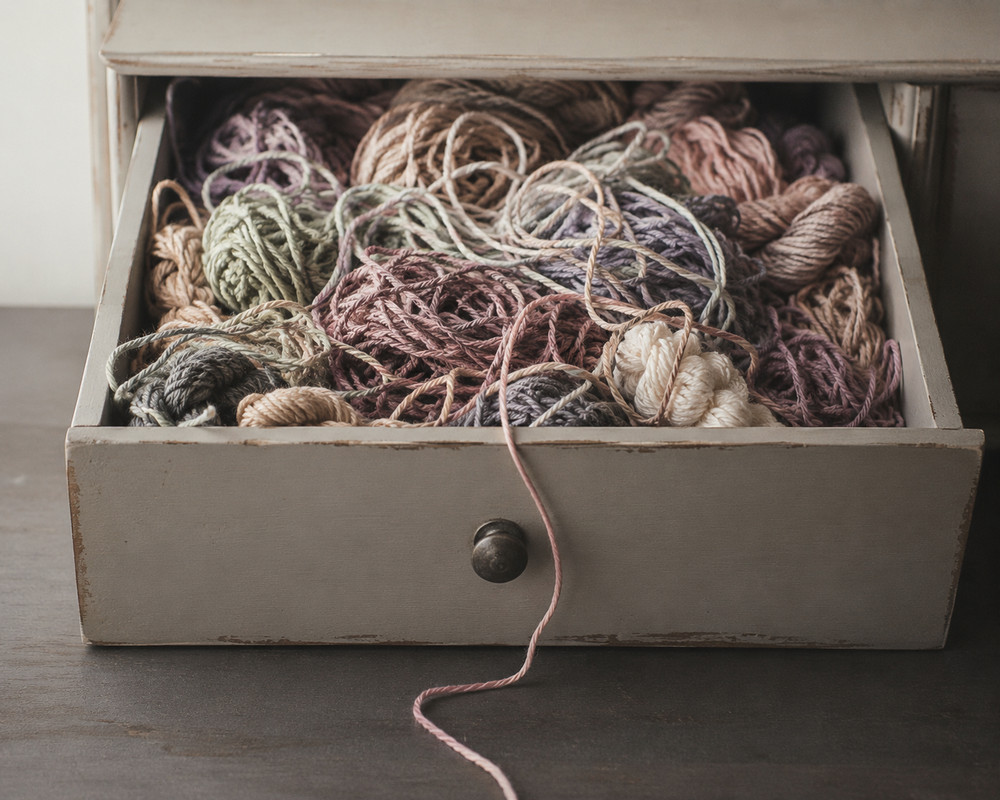
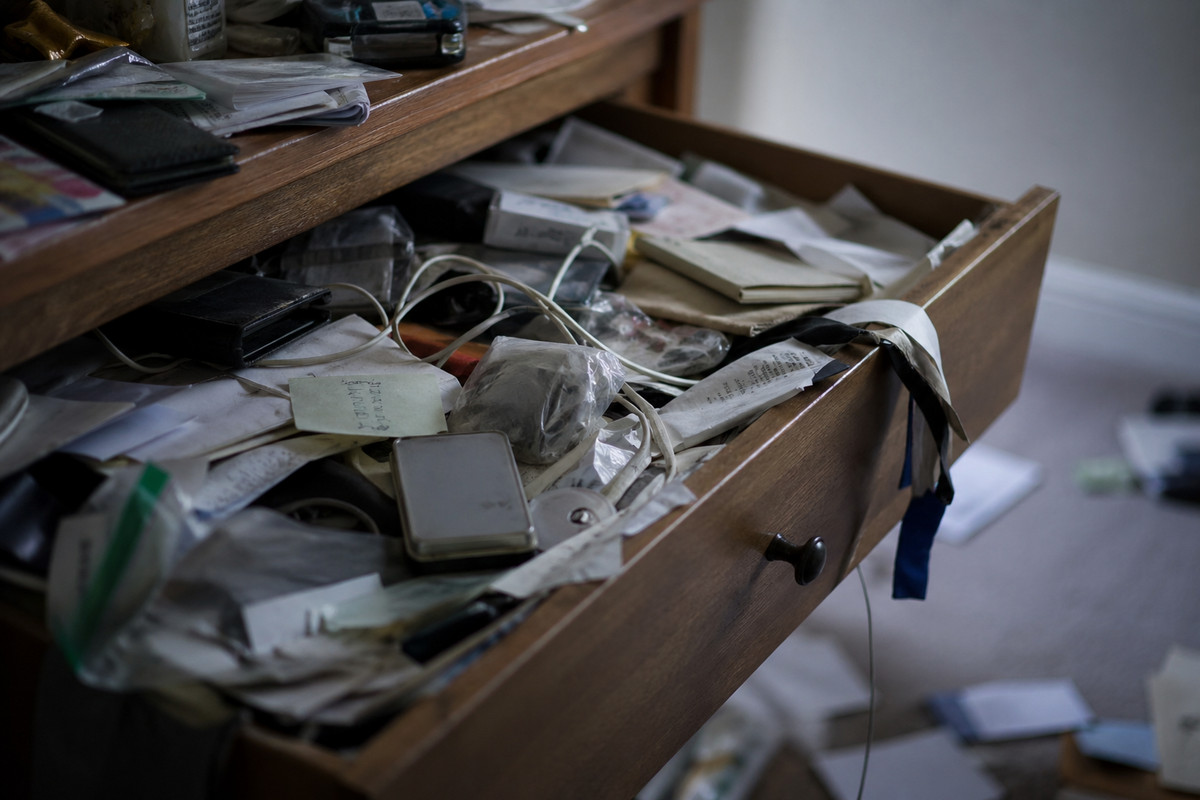
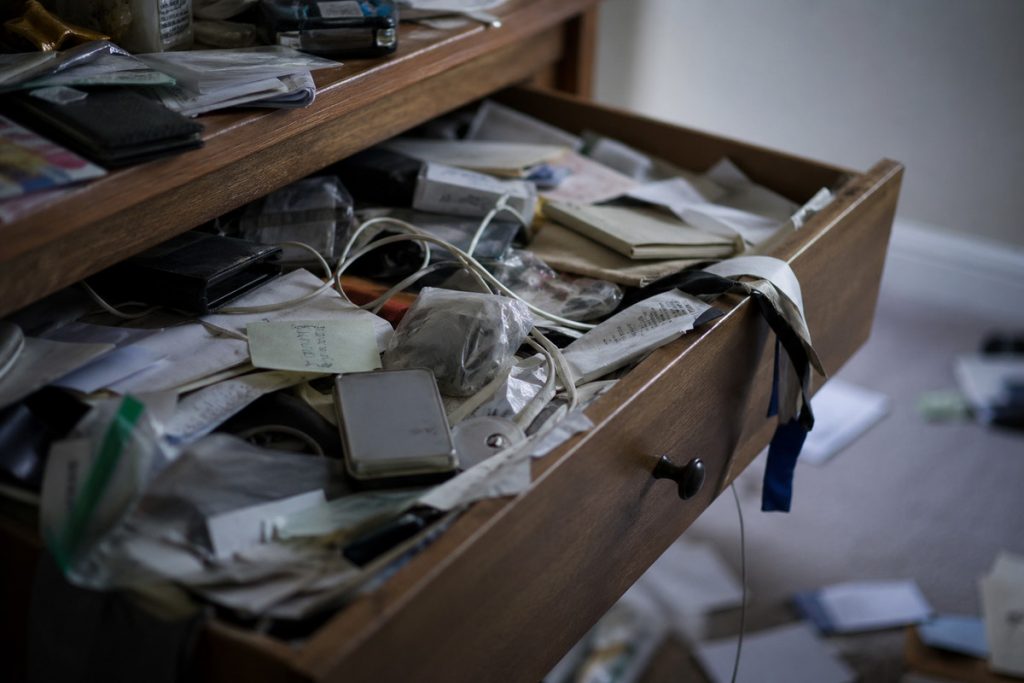
    What you didn’t finish, what you forgot, what’s waiting for you—it all keeps going. One thought pulls in another, like opening a messy drawer “just for a second.”

    crochet for overwhelm messy drawer mental clutter

    And suddenly, you’re not resting. You’re just… sitting there, still carrying everything. Your chest a bit tight, your thoughts a bit loud.

    Here’s the part no one really tells you:

    Your mind doesn’t calm down just because you stop.
    It needs something to hold onto.

    That’s where crochet helps.
    Not as a hobby you need to be good at. Not another thing to “do properly.”
    Just something simple that gives your thoughts a softer place to land.


    When everything feels too much

    Right now, it probably doesn’t feel like you just have “a lot to do.”

    It feels like everything is happening at once—in your head.

    You finish one thing, and your mind is already halfway into the next. You try to focus, but something else tugs at you. Even when nothing urgent is happening, your thoughts keep pacing back and forth.

    You’re never fully here.

    And when you finally get a moment for yourself, it doesn’t feel like relief. It feels… awkward. Like you can’t quite sink into the chair. Like you should be doing something else.

    You might even feel a little frustrated with yourself—like, why can’t I just relax for a second? Why is this so hard?

    You feel tired—even if your body didn’t do that much.
    Your mind has been running laps all day.


    Why “just rest” doesn’t work

    You’ve probably tried to slow down.

    Maybe you told yourself, just sit for a bit. Maybe you even stared at the ceiling, hoping something would click.

    But the moment you stop, your thoughts get louder.

    Nothing is holding your attention anymore—that’s why this happens. So your mind fills that space with everything it’s been juggling.

    And then—you grab your phone. Or turn on something. Anything.

    And part of you already knows it won’t really help—but you do it anyway, because it’s the easiest way to escape the noise for a moment.

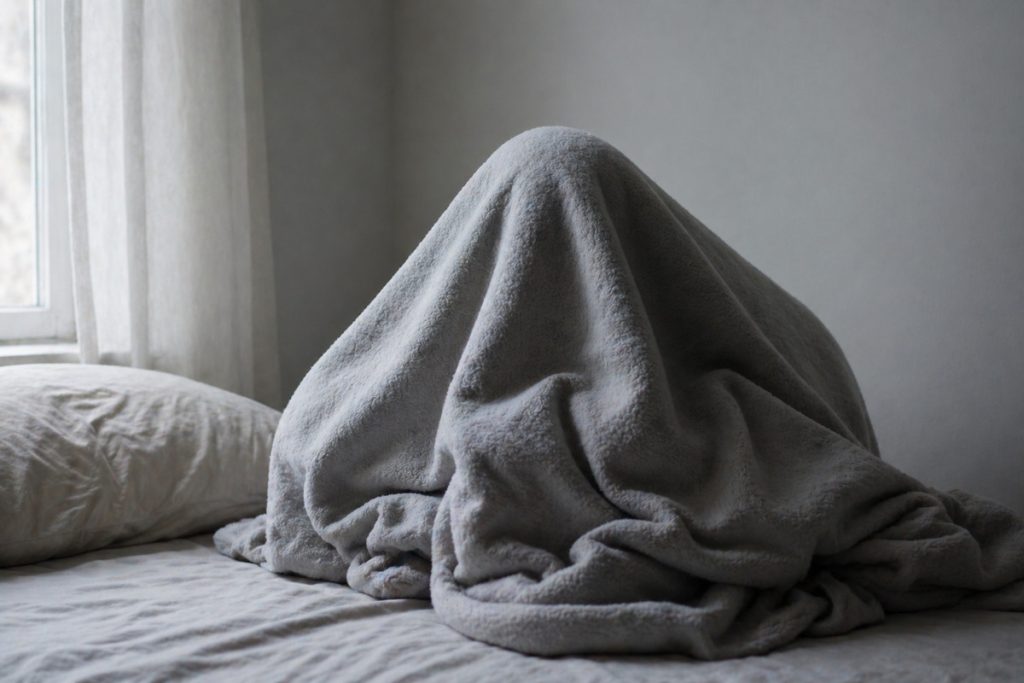
    Distraction is like putting a blanket over the noise. It muffles it for a moment, but it’s all still there underneath.

    crochet for overwhelm hiding under blanket quiet escape

    What your mind actually needs

    So what does help?

    Not more space.
    Not more advice.
    Definitely not more pressure to “relax properly” (as if that’s even a thing).

    Your mind needs something simple to focus on.

    Right now, your thoughts are scattered. They keep jumping because there’s no clear place to land.

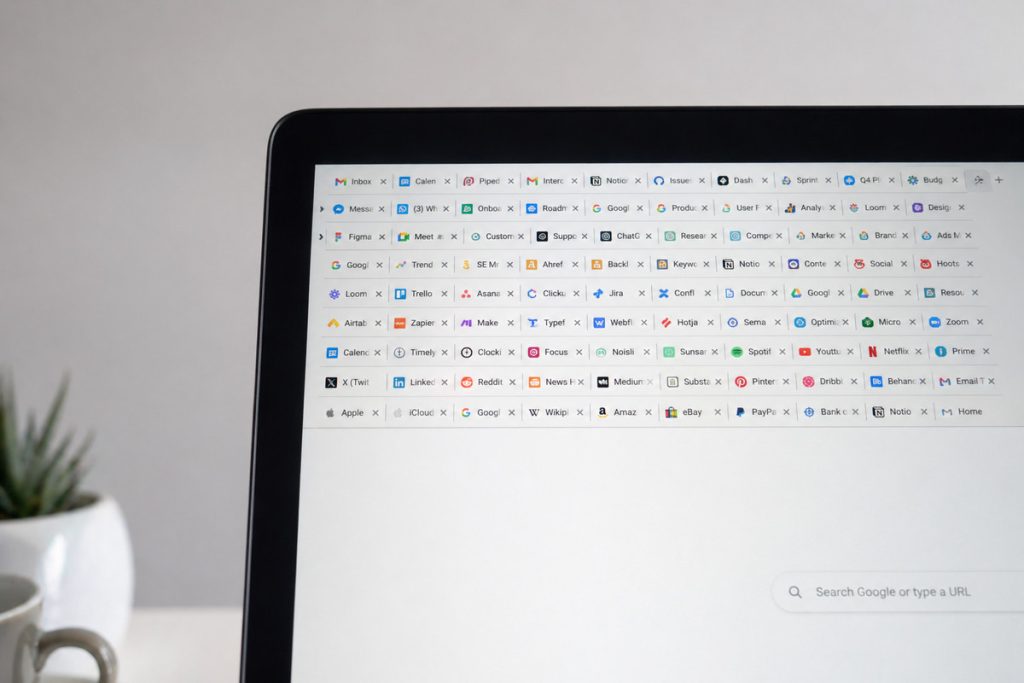
    It’s like having too many browser tabs open—everything is still running, even the ones you forgot about. And your system just… slows down.

    crochet for overwhelm too many tabs mental overload

    Something small and repetitive helps.

    Because repetition gives your mind a rhythm.
    And rhythm quietly replaces the chaos.


    How crochet helps

    This is where crochet for overwhelm becomes different from simple distraction.

    You don’t have to think much. Which, honestly, is a relief.

    You hold the yarn, soft between your fingers. You make one stitch. Then another.

    Your hands move in a steady, almost gentle rhythm. And your attention follows without you having to force it.

    You’re not wrestling your thoughts into silence.
    You’re just giving them somewhere else to go.

    One stitch.

    Then the next.

    You’re not fixing your whole day. You’re not solving your life.
    You’re just… here.

    And after a few minutes, something shifts.

    Your thoughts are still there, but they’re not pulling you in ten directions anymore. They slow down. Soften a bit.

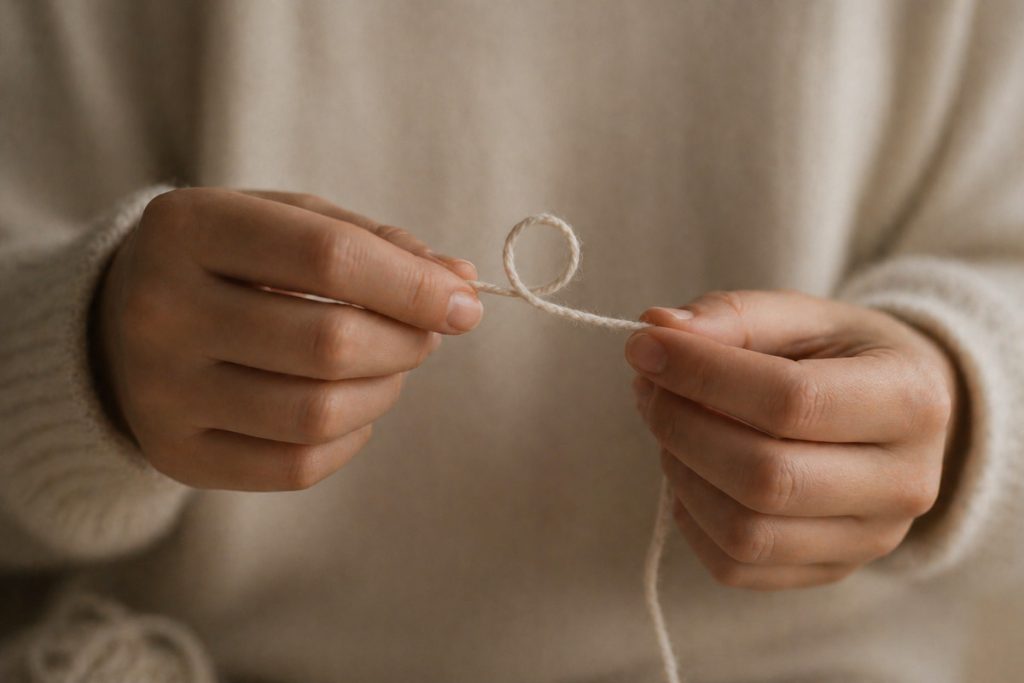
    crochet for overwhelm hand relaxing from tension to calm

    You feel a little more grounded. Your breathing eases, almost without asking.

    It’s not magic.

    But it helps.


    A moment I remember

    I remember one evening when I felt exactly like this.

    Nothing big happened. Just too many small things stacking up quietly. Messages I hadn’t answered. Things I needed to finish. Thoughts that kept looping like a song stuck on repeat.

    I sat down, thinking I would rest.

    But the moment I did, everything got louder.

    I didn’t have the energy to do anything “useful,” but I also couldn’t just sit there with that noise.

    So I picked up my yarn.

    No plan. No idea what I was making.

    Just a few stitches.

    At first, nothing changed. My thoughts were still busy doing their thing.

    But my hands kept moving. That small, steady motion repeats again and again.

    One stitch. Then the next.

    And slowly, without me forcing anything, it got quieter.

    Not silent. Not perfect.

    But manageable. Like the volume turned down just enough.

    That was enough.

    It clicked for me then: this isn’t really about making something at all.

    It’s about having somewhere to return when your mind feels too full.


    Why repetition helps

    You might be wondering—why does this even work?

    It’s simpler than it sounds.

    When you repeat the same movement, your brain doesn’t have to keep making decisions.
    And fewer decisions mean less mental strain.

    At the same time, your focus shifts from your thoughts to something real—your hands, the yarn, the stitch.

    And that shift matters.

    Because overthinking lives in your head.
    But this gently pulls you out of it.

    Simple, repetitive things often feel calming—even if they look almost too simple to matter.

    crochet for overwhelm repetitive pattern calming rhythm

    Studies have shown* that crochet can support mental well-being, with many people using it to manage life challenges such as grief, chronic illness, and pain—confirming the role of repetitive movements in reducing stress.

    That’s why crochet for overwhelm works—it reduces the need for constant mental decisions.


    How to start (without pressure)

    If you’re thinking, this sounds nice, but I don’t have time or energy for this—I get it.

    This is exactly why this works.

    You don’t need energy for crochet for overwhelm—you just need a few quiet minutes.

    No big project.
    No plan.
    No “I have to do this right.”

    Just a few minutes.

    Sit down. Take the yarn. Hold the hook. Make a few stitches.

    That’s it.

    Even five minutes can be enough to take the edge off the overwhelm.
    Because your mind doesn’t need hours—it just needs a small signal that it can slow down.

    And one more thing—this matters:

    Don’t turn this into a task.

    You’re not doing this to be productive.
    You’re doing this to feel a little more okay.

    And when your thoughts come back—and they will—that’s not a failure.

    You don’t have to stop them.

    You just return to the next stitch.

    That’s it.

    You don’t have to fix everything today.

    You just need one small moment where things feel a little quieter.


    In short

    Sometimes, crochet for overwhelm is enough to soften the noise in your head. When your mind feels like too much, don’t force it to be quiet.
    Give it something simple to follow—and let it slow down on its own. 🤗

    Notes

    * P. Burns, R. Van Der Meer (2021) Happy Hookers: findings from an international study exploring the effects of crochet on wellbeing. Perspectives in Public Health: Formerly Journal of the Royal Society for the Promotion of Health. Volume 141, Issue 3

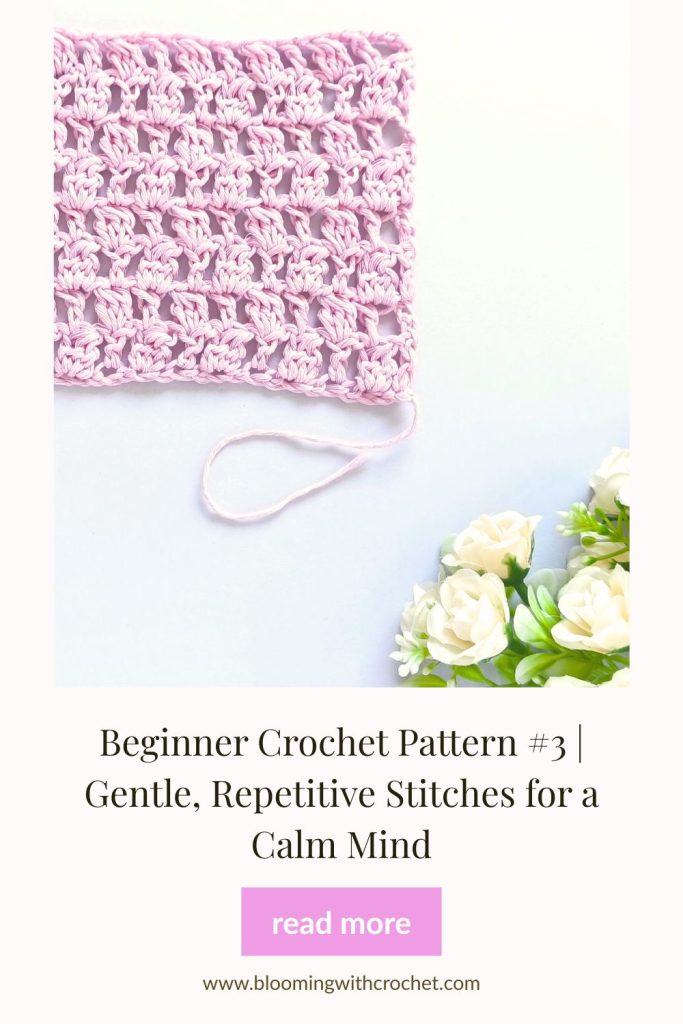
  • Beginner Crochet Pattern #3 | Gentle, Repetitive Stitches for a Calm Mind

    Beginner Crochet Pattern #3 | Gentle, Repetitive Stitches for a Calm Mind

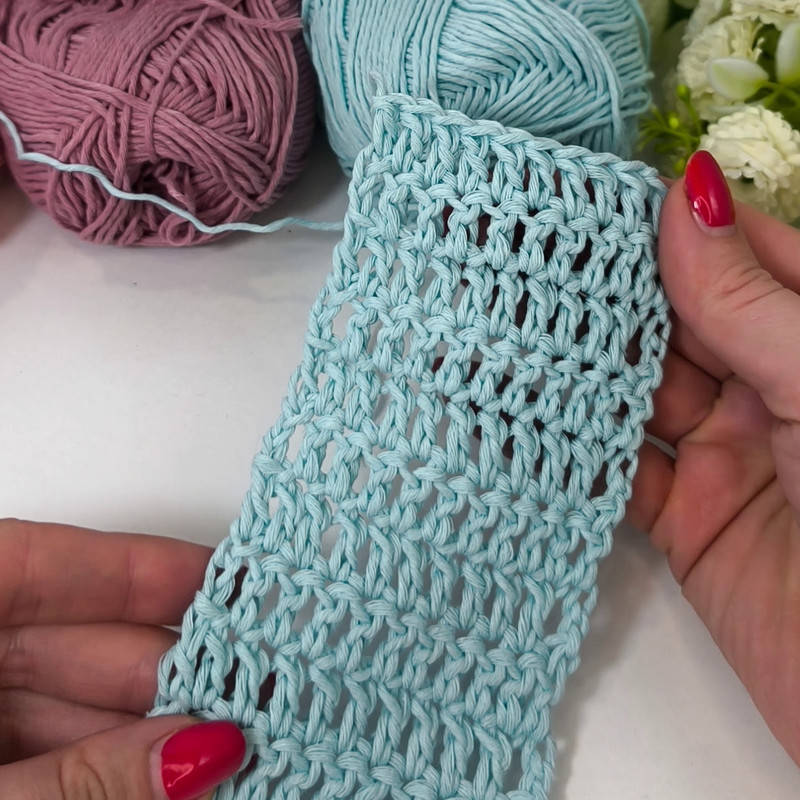
    Beginner Crochet Pattern can be a quiet way to slow your mind when it won’t stop.

    Your mind doesn’t stop—even when you do. You sit down, maybe with your phone in your hand, the screen softly glowing against your fingers, thinking this is the moment you’ll finally rest… and then your thoughts start lining up like impatient little voices—what you didn’t finish, what’s waiting tomorrow, what might fall apart if you let go for even a second—and somehow you end up trying to keep track of all of it at once, like juggling things no one even asked you to hold.
    You might even catch yourself feeling guilty for sitting still, like resting is something you have to earn first, and that quiet pressure just doesn’t let you switch off.

    This video is for you in that exact moment.

    Gentle, Repetitive Stitches for a Calm Mind

    This is a crochet tutorial you can just follow. A beginner crochet pattern, simple enough that you don’t have to overthink it. You go step by step. That’s it. Basic crochet stitches, repeating in a steady rhythm, so your brain doesn’t have to keep jumping ahead or solving anything. And that matters more than it sounds, because that constant “figuring things out” is what’s wearing you down.

    The point here isn’t what you make.

    It’s what happens while you’re making it.

    As you repeat the same simple crochet pattern, your hands start to move in a quiet, steady way, the yarn sliding gently over your fingers, and it’s almost like tracing the same small circle again and again. Nothing surprising. Nothing urgent. Just… this. And without you forcing anything, your mind starts to loosen its grip a little, like someone slowly turning down the volume in the background.

    You might notice at some point that you’re not chasing every thought anymore. They’re still there, sure—but you’re not glued to them. Your attention shifts. You’re watching your hands, feeling that small, soft pull of the yarn with each stitch, and for a moment, that’s enough. That’s what this repetitive crochet does—it gives you a gentle way out of that mental loop, like stepping off a spinning carousel instead of trying to stop it mid-spin (which, let’s be honest, never works well).

    It doesn’t matter if you’ve never done this before. That’s why this is crochet for beginners. And if you have, even better—you can use it as calming crochet when your mind gets loud again. This is slow crochet. Mindful crochet. Something simple you can come back to when everything feels a bit too much, because here, nothing unexpected is waiting for you. No decisions. No pressure. Just the same small movement, over and over.

    If that familiar thought shows up—“I don’t have time for this” or “this should look better”—just notice it and keep going, feeling the hook turn lightly between your fingers. You don’t need to argue with it. You don’t need to fix it. Because the moment you stop to make everything perfect, you’re right back in that same loop you were trying to step out of.

    Beginner Crochet Pattern

    If you came here looking for crochet for anxiety, this is it.

    Not some big, life-changing fix. Just a small, quiet pocket of time that’s yours. A place where your mind can slow down for a few minutes—like stepping into a room where nothing is expected from you.

    If you feel like continuing, you can gently explore these beginner crochet patterns too.

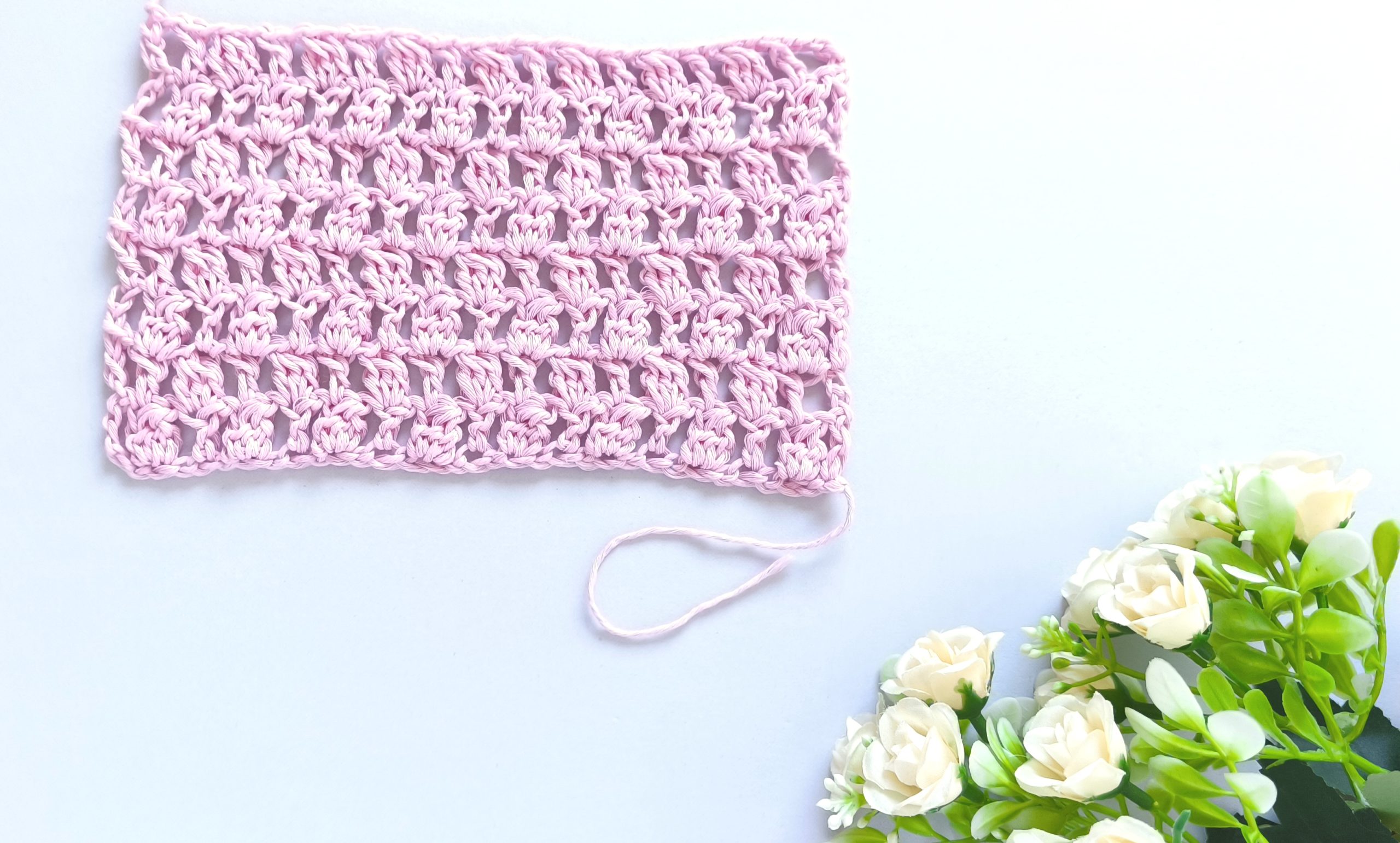
    Pattern:

    Chain 37. This will be your foundation chain.

    Dc3tog in 7th chain from the hook. Ch1.

    Repeat the pattern as follows: skip 1 chain, dc in next, ch1, skip 1 chain, dc3tog in next, ch1.

    Dc in the last chain.

    Ch4 and turn your work.

    Repeat the pattern as follows: Dc in dc3tog, ch 1, dc3tog in dc, ch1.

    Dc in 6th chain of 7ch group of previous row.

    Chain 4, and turn your work.

    Repeat the pattern as follows: dc3tog in dc,ch1, dc in dc3tog, ch1.

    Dc in 3rd chain of 4ch group of the previous row.

    Just keep repeating rows 2 and 3 until it’s as long as you want.

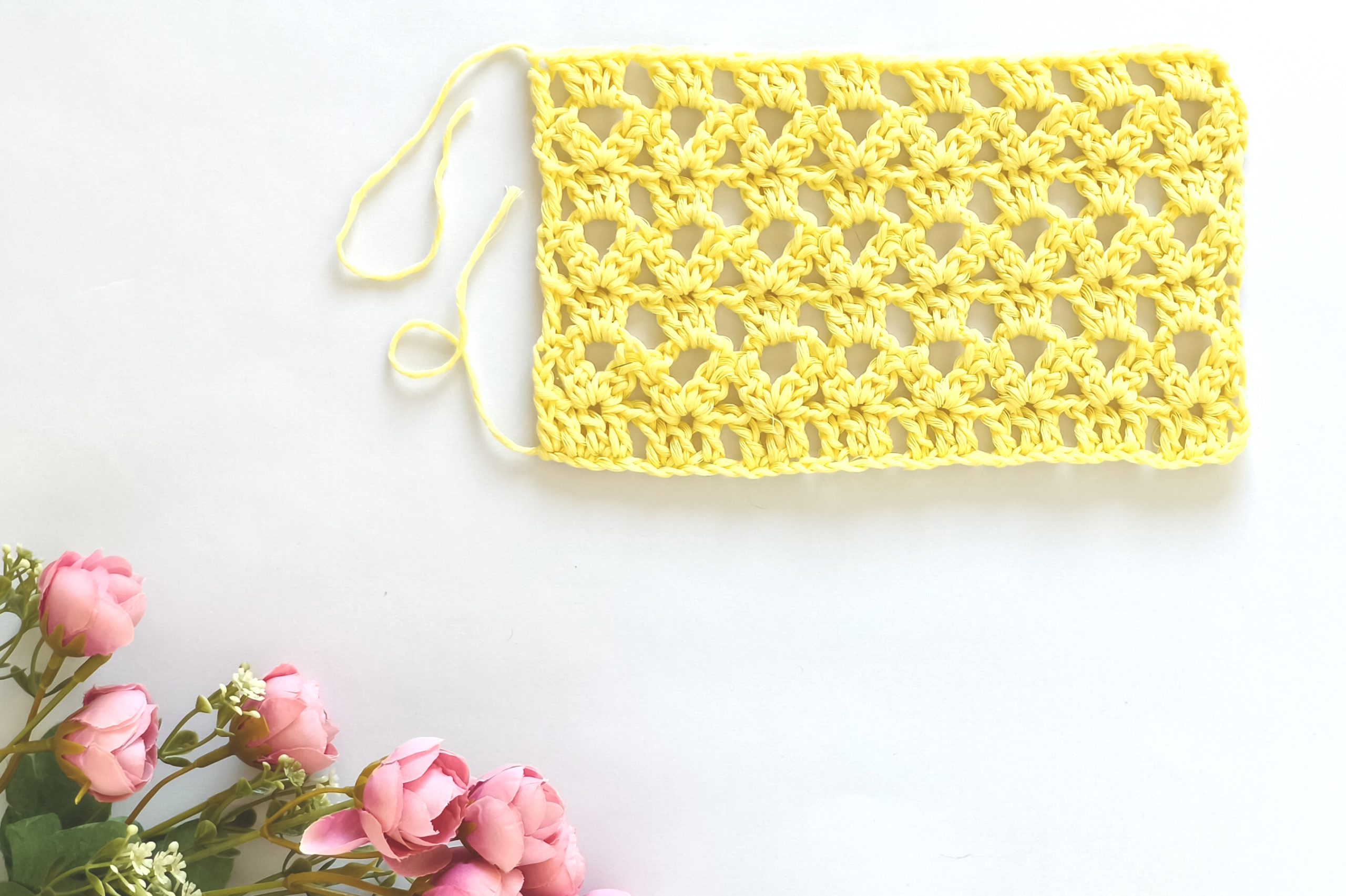
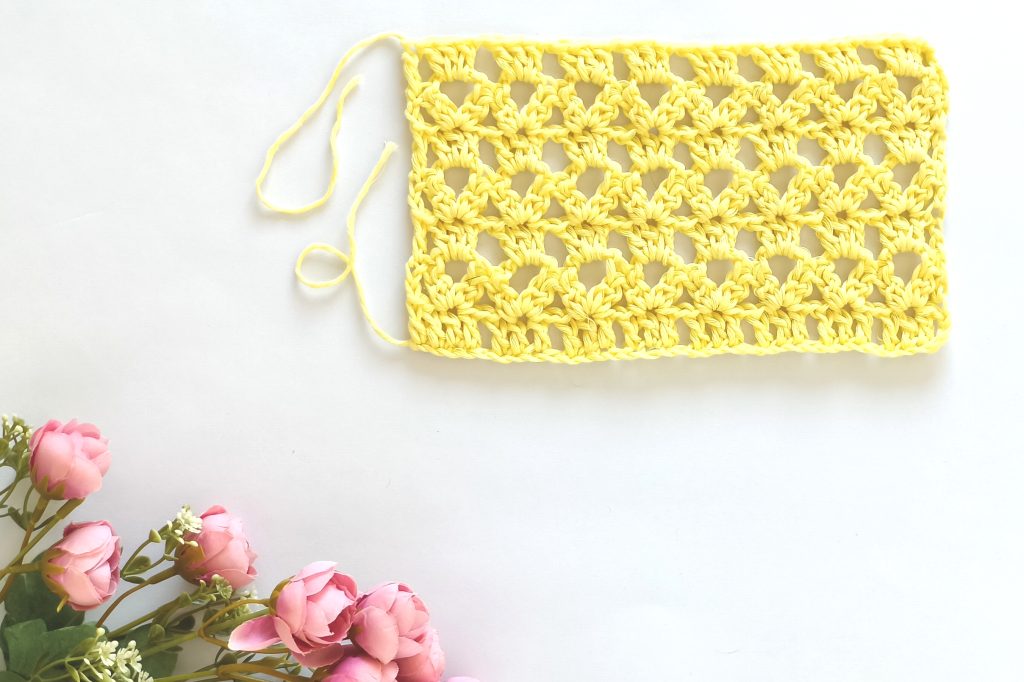
  • Beginner Crochet Pattern #2 | Gentle, Repetitive Stitches for a Calm Mind

    Beginner Crochet Pattern #2 | Gentle, Repetitive Stitches for a Calm Mind

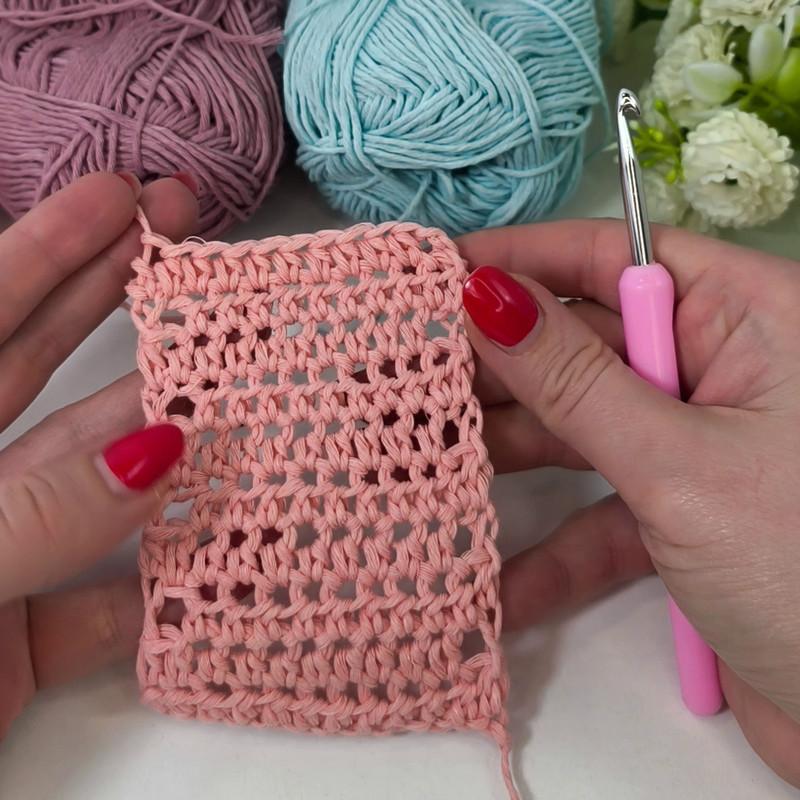
    This beginner crochet pattern gives your hands something simple to follow, so your thoughts can slow down, even for a moment.

    Your mind doesn’t stop, even when you sit down to rest.
    You notice it immediately.

    Your body is still, but your shoulders stay slightly tense.
    Your thoughts keep running, like ten browser tabs that refuse to close.
    They refresh on their own.

    It’s exhausting.
    Not because you can’t handle things, but because you never really pause.

    You probably catch yourself thinking, “just one more thing.”
    Then another. And another.
    Rest never really happens.

    Gentle, Repetitive Stitches for a Calm Mind

    A simple crochet pattern can help here, not as one more thing on your to-do list, but as something quiet you can hold onto, because when you repeat the same small movement, pulling the yarn through the loop and feeling it slide softly between your fingers, your focus starts to drift out of your head and into your hands, and your thoughts don’t disappear, but they do get a bit quieter and a bit less pushy.

    beginner crochet pattern

    In this beginner crochet pattern tutorial, you don’t need experience, really, it’s crochet for beginners, just how to crochet step by step, using basic crochet stitches and repeating the same rows, and that repetitive crochet is the key part, because your mind finally gets something simple and steady to follow, like counting stitches one by one instead of running through every possible “what if” in your life.

    You don’t need a lot of time for this, and you don’t need to get it perfect, this is a simple crochet pattern, more like slow crochet and mindful crochet, where your only job is to stay with the movement, one stitch at a time, almost like a quiet rhythm your hands understand even when your mind is a bit all over the place, and that’s what helps you stay here instead of getting pulled back into everything else.

    This is calming beginner crochet pattern, relaxing crochet, and even if nothing big changes today, it gives you a small, quiet corner that feels just a little lighter, like turning down the volume on that constant background noise, especially if you’re looking for crochet for anxiety, because for a few minutes, you’re not fixing anything, you’re just… here, and that’s more than enough.

    You can also try this simple crochet square pattern.

    Pattern:

    Chain 36. This will be your foundation chain.

    Dc in 5th ch from the hook. Dc in next 2 chains. Ch1. Repeat the pattern as follows: Skip 1 chain, dc in next 3 chains. Dc in the last chain.

    Chain 3 and turn your work. Dc2tog in 3rd dc, ch4, dc2tog in the same dc.

    Repeat the pattern as follows: [dc2tog, ch4, dc2tog] in 2nd dc of 3 dc group.

    Dc in 3rd ch of 3ch group of previous row.

    Chain 3 and turn your work.

    3dc in next chain space.

    Repeat the pattern as follows:

    Ch1, 3dc in next chain space.

    Dc in 3rd chain of 3 chains group of the previous row.

    Just keep repeating rows 2 and 3 until it’s as long as you want.

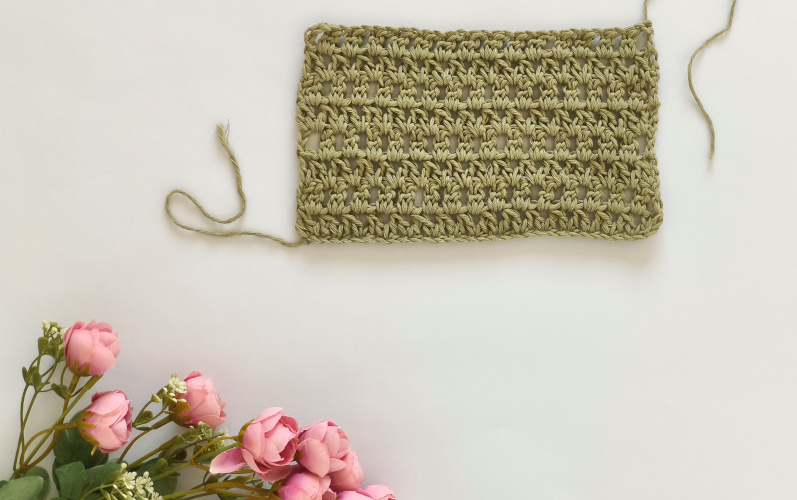
  • Beginner Crochet Pattern #1 | Gentle, Repetitive Stitches for a Calm Mind

    Beginner Crochet Pattern #1 | Gentle, Repetitive Stitches for a Calm Mind

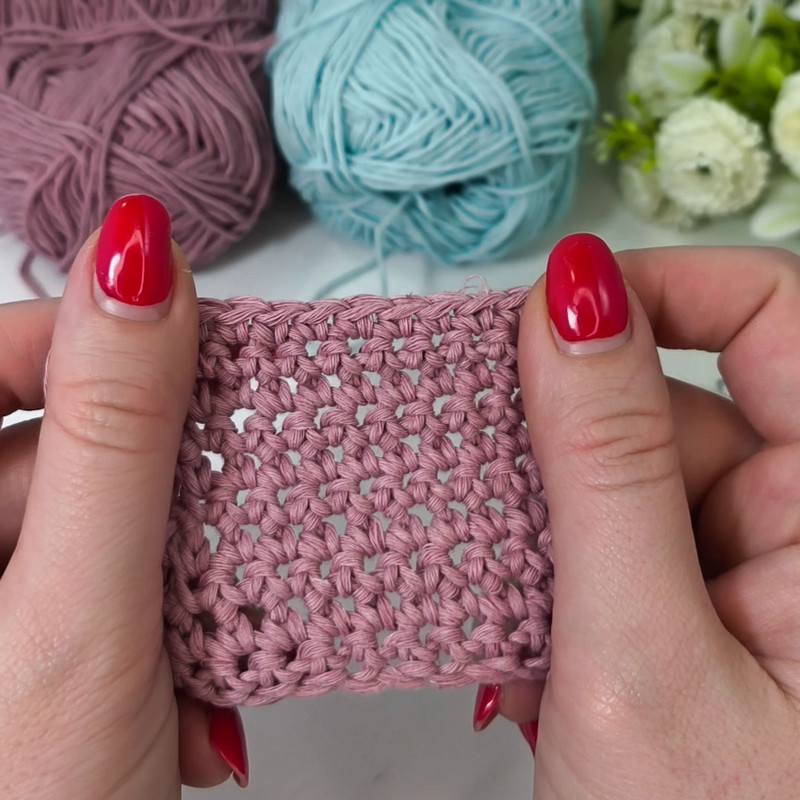
    This beginner crochet pattern is simple on purpose — because your mind doesn’t need more to think about, it needs less.

    You don’t have to figure anything out here. This easy crochet pattern is made of small, repeatable steps that are easy to follow, so your attention can stay in one place instead of jumping around like ten tabs open in your head at once.

    Gentle, Repetitive Stitches for a Calm Mind

    This crochet tutorial isn’t here to challenge you. It gives your mind something steady to hold onto so it can slow down, even just a little — because when your hands repeat the same movement, your focus begins to settle like your breathing softening when it finds a steady rhythm, while the yarn glides quietly under your fingers.

    If your head keeps going even when you finally sit down, if there’s that quiet pressure telling you to do more, finish more, think ahead — this repetitive crochet pattern gives you one simple place to return to. Nothing to solve. Nothing to get right. Just one stitch, then the next.

    repetitive crochet stitches calming process
beginner crochet pattern

    The beginner crochet pattern is simple on purpose. You need something predictable — something your brain doesn’t have to overthink — so your hands can keep moving while your thoughts slowly lose their edge.

    At the beginning, your mind might still wander. That’s normal. Just follow the steps and let the repetition do its quiet work.

    This isn’t about making something perfect. It’s about the rhythm. One stitch at a time. That’s where a bit of calm starts to sneak in.

    If you’re completely new, you can also start with this beginner crochet guide.


    You can stop whenever you want and come back when you need that quiet again.
    This pattern will still be here, steady and simple, waiting for your hands to pick it up again.

    Pattern:

    Chain 34.

    Dc in 5th chain from hook. Ch1

    Make dc2tog. 1st leg of dc2tog in the same ch as 1st dc, skip 1 ch, 2nd leg of dc2tog in next ch.

    Ch1, and repeat the process. 1st leg of dc2tog in the same ch as 2nd leg of previous dc2tog, skip 1 ch, 2nd leg of dc2tog in next ch.

    Do the last three chains as shown. You will have 1 chain left.

    Work the last dc2tog like this: make the 1st leg of dc2tog in the same ch as 2nd leg of previous dc2tog, and 2nd leg of dc2tog in the last chain.

    Ch3 (count as dc), turn. Dc2tog in the next chain space. Ch1.

    Repeat the pattern as follows: dc2tog in the next chain space, ch1.

    Dc2tog in the last chain space. Dc in the 4th chain of 4ch group.

    Chain 3 and turn your work.

    Do 1st leg of dc2tog in the same space as ch3. and the 2nd leg of dc2tog in the next ch sp. Ch1.

    Repeat the pattern as follows: 1st leg of dc2tog in the same ch sp as 2nd leg of previous dc2tog. 2nd leg of dc2tog in the next ch sp. Ch1.

    Work the last dc2tog as follows: 1st leg int the same ch sp as 2nd leg of prev dc2tog. 2nd leg in 3rd chain of 3ch gropu of prev row. Dc in the same chain.

    Chain 4 and turn your work. Dc 2 tog in the next ch sp. Ch1.

    Repeat as follows: dc2tog in the next chain space, ch1.

    Work the last dc2tog in the last ch sp. Ch1, dc in the 3rd ch of 3ch group of prev row.

    Chain 3, and turn your work. Dc in next ch sp. Ch1.

    1st leg of dc2tog in the same ch sp as prev dc. 2nd leg of dc2tog in the next ch sp. Ch1.

    1st leg of dc2tog in the same ch sp as 2nd leg of previous dc2tog 2nd leg of dc2tog in the next ch sp. Ch1.

    Now work the last dc2tog of this row as follows: 1st leg of dc2tog in the same ch sp as 2nd leg of prev dc. 2nd leg of dc2tog in 3rd ch of 4ch group of prev row.

    Continue the pattern by repeating rows 2, 3, 4, and 5 in the same order until you reach the desired length.

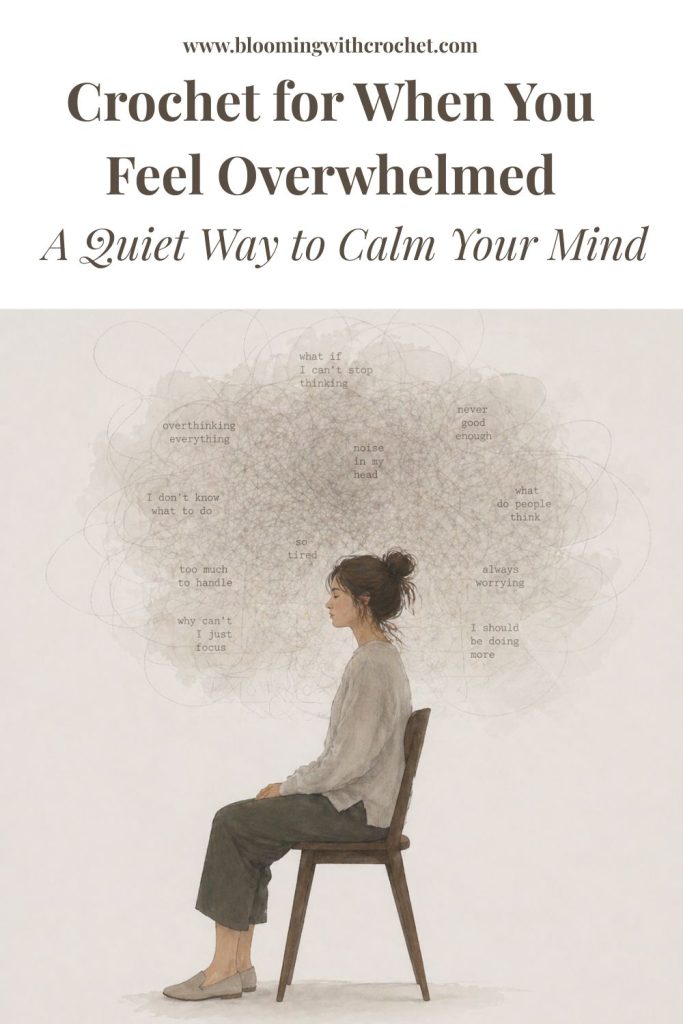
  • Crochet for When You Feel Overwhelmed: A Quiet Way to Calm Your Mind

    Crochet for When You Feel Overwhelmed: A Quiet Way to Calm Your Mind

    If you’ve been searching for crochet for when you feel overwhelmed, this might be exactly what you need — not another task, but a small moment of quiet.

    You’re not overwhelmed because you have too much to do.
    You’re overwhelmed because your mind never gets a real break.

    You finally sit down… your shoulders sink into the chair.
    And for a second, it looks like rest.

    But your mind? Not even close.

    It keeps going.
    What’s left. What’s next. What you forgot.
    It hums quietly in the background, like a fridge you didn’t notice until the room got still.

    After a while, you start wondering if something’s wrong with you.
    Like… shouldn’t you be able to handle this better by now?


    Quick check

    Don’t overthink this. Just notice what hits.

    Do you finish things, but your mind keeps going anyway?
    Do you try to rest, but still think about what you should be doing?
    Do you feel guilty when you’re not being productive?
    Do you tell yourself you just need to organize better (again)?
    Do you avoid starting small things because they won’t be “perfect”?
    Do you feel tense even when everything looks fine from the outside?
    Do you feel like you don’t need more advice — just a quiet mind?

    If you caught yourself nodding even once… yeah. This is you.


    What’s actually happening

    It’s not your to-do list.

    Nothing ever feels finished in your head.

    You complete something… and your brain immediately pulls up the next thing.
    No pause. No “good job.” No “you can stop now.”

    It’s like finishing a task, but no one ever says you’re done.
    So you just stand there, waiting for the next instruction — even when there isn’t one.

    Of course your mind stays on.
    It never got permission to turn off.

    That’s not you failing.
    That’s just how your brain is trying to keep up.


    Why rest doesn’t really work

    You try, though.

    You sit down. You scroll. You lie in bed and stare at the ceiling like it might give you answers.

    But your mind keeps going behind the scenes.

    You replay conversations.
    You plan tomorrow.
    You fix things that didn’t even happen yet (very productive, by the way).

    Your brain is trying to close all those open loops.

    So when you get up, you’re still tired.
    Not the “I need sleep” kind — more like a heaviness behind your eyes.

    Then comes that familiar thought:
    “I just wasted time.”

    You probably even tell yourself you’ll “just rest for a minute”—
    and then spend that minute arguing with your own thoughts instead of actually resting.

    So you go back to doing.

    Not because you want to.
    But because sitting in that mental noise feels harder.

    You’re not using crochet for when you feel overwhelmed to be productive — you’re using it to breathe.


    Where crochet fits when you feel overwhelmed

    You don’t need another task.
    Honestly, you’d probably like to return a few.

    This is why crochet for when you feel overwhelmed works differently.

    Crochet gives your hands something small and steady to do.
    And that matters more than it sounds.

    When your hands repeat one simple movement, your mind has less space to jump all over the place.

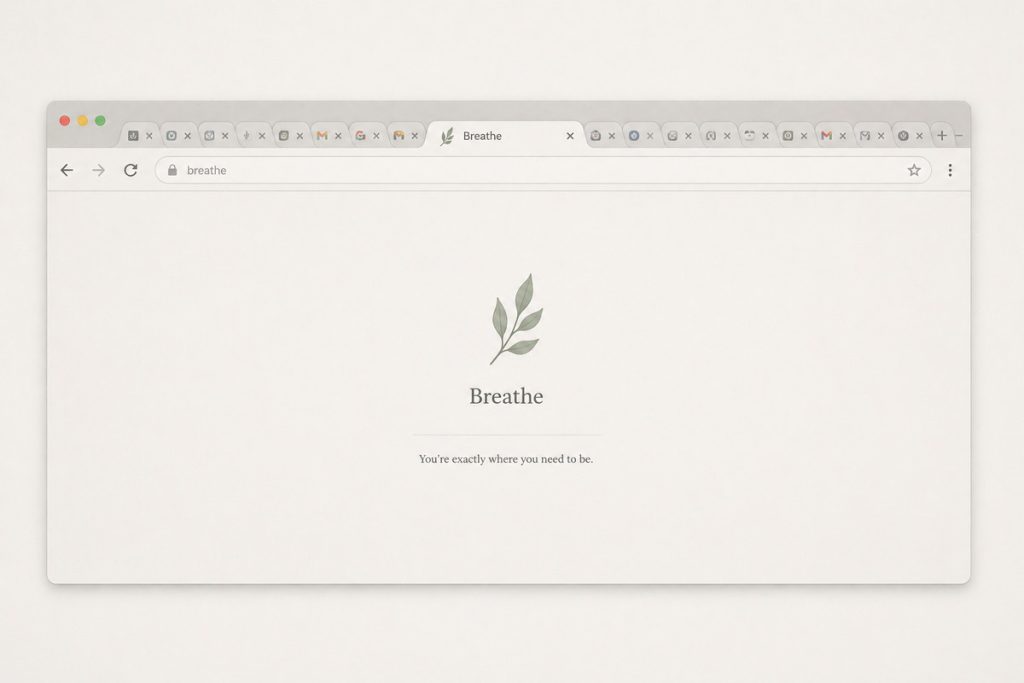
    It’s like having ten tabs open in your head, all making noise at once.
    Crochet doesn’t slam them shut.

    It just opens one quiet tab… and the rest slowly fade into the background.

    You’re not forcing yourself to relax.
    You’re just… not feeding the chaos.

    Same movement. Again and again.
    Yarn sliding softly through your fingers.

    Nothing urgent. Nothing to prove.

    For a moment — a small one, but real — your mind has somewhere to land.


    Why this actually helps

    Your brain is constantly scanning.
    What’s next? What’s wrong? What’s unfinished?

    Repetition changes the pace.

    crochet for when you feel overwhelmed calming hands with yarn

    When you do the same simple movement, nothing new is happening.
    There’s nothing to solve and nothing to fix.

    So your system slowly stops acting like everything is urgent.

    Your attention shifts — not because you force it, but because your hands are busy doing something calm and steady.

    That’s why people often feel better after crocheting.
    Not because they ran away from their thoughts…
    but because the thoughts finally slowed down enough to breathe.

    Research shows this too.*
    People report feeling calmer, lighter, and more stable after crocheting.
    Their mood improves.

    Not because of what they made.

    But because of how it felt while they were making it.


    A small start (that’s all this is)

    You don’t need more time.
    And you don’t need to do this “right”.

    This is not about becoming good at crochet.

    This is about giving your mind a moment where it doesn’t have to carry everything.

    Five minutes is enough.
    Messy stitches? Also fine.
    Stopping halfway? Completely allowed.

    You’re not building something perfect here.

    You’re giving yourself a small, quiet pause.
    The kind your mind has been asking for… just not very politely.

    And honestly?

    You don’t need to fix everything today.
    You don’t need to catch up on your whole life tonight.

    You can just pick up a piece of yarn…
    make one loop… then another…

    and let that be enough for now. 🧶

    If you don’t know where to start, you can begin with a simple beginner crochet pattern.

    Notes

    * P. Burns, R. Van Der Meer (2021) Happy Hookers: findings from an international study exploring the effects of crochet on wellbeing. Perspectives in Public Health: Formerly Journal of the Royal Society for the Promotion of HealthVolume 141, Issue 3

  • 5 Crochet Mistakes (and How to Avoid Them)

    5 Crochet Mistakes (and How to Avoid Them)

    Crochet mistakes are more common than you might think. Starting your crochet journey can be exciting but also overwhelming. As a beginner, it’s natural to make errors, but recognizing and correcting them early will make your experience much smoother. In this guide, we’ll cover the five most common mistakes and how to fix them so you can crochet with confidence.

    1. Holding the Hook and Yarn Incorrectly

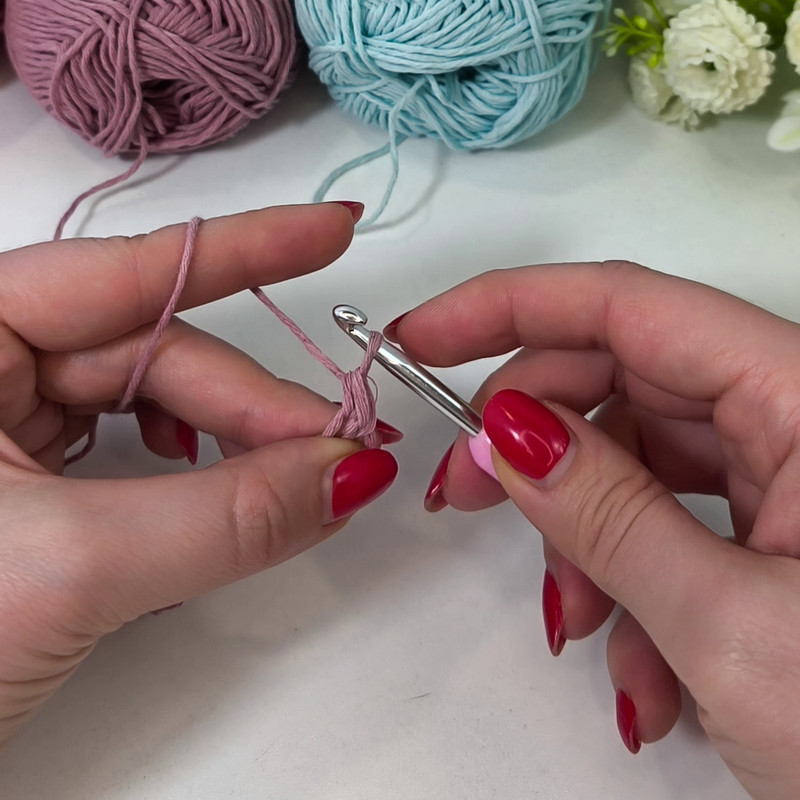
    One of the first challenges beginners face is finding a comfortable way to hold their hook and yarn. If you grip too tightly, your hands can tire quickly, and if you hold too loosely, your stitches may be uneven.

    How to Fix It:

    ✔ Experiment with different grips, such as the pencil grip or knife grip, to find what feels most natural.
    ✔ Keep a relaxed hold on the yarn to maintain even tension.
    ✔ Practice slow, deliberate movements until holding the hook feels comfortable.

    2. Uneven Tension in Stitches

    Tension refers to how tightly or loosely you pull your yarn while crocheting. Uneven tension can lead to stitches that are too tight and difficult to work into, or too loose, creating a sloppy appearance.

    How to Fix It:

    ✔ Maintain consistent yarn placement over your fingers.
    ✔ Practice simple stitches repeatedly to develop muscle memory.
    ✔ If your stitches are too tight, try using a larger hook; if too loose, try a smaller hook.

    3. Skipping or Adding Extra Stitches

    Many beginners unknowingly add or skip stitches, which results in uneven edges and an incorrect stitch count.

    How to Fix It: ✔ Always count your stitches at the end of each row.
    ✔ Use stitch markers to mark the first and last stitch of each row.
    ✔ Follow patterns closely, especially when learning new stitches.

    crochet mistakes for beginners

    4. Not Practicing Basic Stitches Enough

    Jumping into complex patterns too soon can lead to frustration. Mastering the basic stitches—single crochet, half-double crochet, and double crochet—will set a strong foundation for future projects.

    How to Fix It:

    ✔ Spend time practicing basic stitches before moving on to advanced techniques.
    ✔ Work on small projects like dishcloths or coasters to refine your skills.
    ✔ Follow step-by-step tutorials to reinforce stitch mechanics.

    5. Not Weaving in Ends Properly

    After finishing a project, leaving yarn ends unsecured can cause stitches to unravel over time.

    How to Fix It:

    ✔ Use a tapestry needle to weave the yarn tail back and forth through stitches.
    ✔ Avoid cutting the yarn too short—leave at least 5-6 inches for weaving.
    ✔ If needed, secure ends with a small knot to ensure durability.

    Final Thoughts

    Mistakes are a natural part of the learning process, but by identifying and correcting these common errors, you’ll build confidence and improve your skills faster. The key to successful crocheting is patience, practice, and enjoying the journey!

    For more crochet stitch guides and tutorials, check out Yarnspirations.

    For more beginner-friendly crochet tutorials, expert tips, and inspiration, download our PDF book, Squares of Serenity, featuring 5 beginner-friendly crochet square patterns and guided instructions.

    Happy Crocheting! 🧶

  • How to Hold Your Needle and Thread Comfortably for Effortless Crocheting

    Mastering how to hold your needle and thread comfortably is one of the most important skills for beginner crocheters. The right grip ensures smooth stitches, reduces hand fatigue, and allows you to crochet for longer periods without discomfort. In this guide, we’ll explore the best ways to hold your crochet hook and yarn, helping you find a technique that works for you.

    Why Proper Needle and Thread Holding Matters

    Holding your needle and thread the right way is key to: ✔ Preventing hand cramps and strain.
    ✔ Maintaining even tension in your stitches.
    ✔ Improving speed and efficiency while crocheting.
    ✔ Making the learning process smoother and more enjoyable.

    Common Ways to Hold Your Crochet Hook

    There are two primary ways to hold a crochet hook:

    1. The Pencil Grip

    • Hold your crochet hook as if you were holding a pencil.
    • Your thumb and index finger grip the hook while the rest of your fingers provide support.
    • This method gives great control and is preferred by those who enjoy detailed, precise work.

    2. The Knife Grip

    • Hold your crochet hook like you would hold a knife when cutting food.
    • Your thumb and index finger grip the hook from above, while your other fingers rest underneath for stability.
    • This method provides more leverage, making it easier to crochet with thicker yarns.

    Best Ways to Hold Your Yarn for Even Tension

    Once you’ve found a comfortable grip for your crochet hook, the next step is learning how to hold your yarn. Here are a few common techniques:

    1. Over-the-Finger Method

    • Loop the yarn over your index finger to control tension.
    • This method is great for consistent, even stitches.

    2. Under-the-Finger Method

    • Hold the yarn under your fingers and let it slide through your palm.
    • This technique works well for those who prefer a looser tension.

    3. Wrap-and-Guide Method

    • Wrap the yarn around your pinky finger before threading it through your other fingers.
    • This provides excellent control, preventing the yarn from slipping too quickly.

    Tips for Reducing Hand Fatigue

    To crochet comfortably for longer periods, follow these tips: ✔ Take breaks every 30–45 minutes to stretch your hands.
    ✔ Keep a relaxed grip—don’t hold the hook or yarn too tightly.
    ✔ Use an ergonomic crochet hook for added comfort.
    ✔ Maintain good posture and keep your wrists in a neutral position.

    Unlock More Crochet Techniques with Our Free PDF Book: “Squares of Serenity”

    Want to improve your crochet skills even further? Download our PDF book, Squares of Serenity, featuring 5 beginner-friendly crochet square patterns, expert tips, and inspirational short stories that reflect the journey of renewal and inner peace through crochet.

    By mastering how to hold your crochet hook and yarn comfortably, you’ll be well on your way to creating beautiful projects with ease. Keep practicing, stay patient, and most importantly—enjoy the process!

    Happy Crocheting! 🧶

  • These 3 Stitches Are a Must-Know for Every Crocheter

    These 3 Stitches Are a Must-Know for Every Crocheter

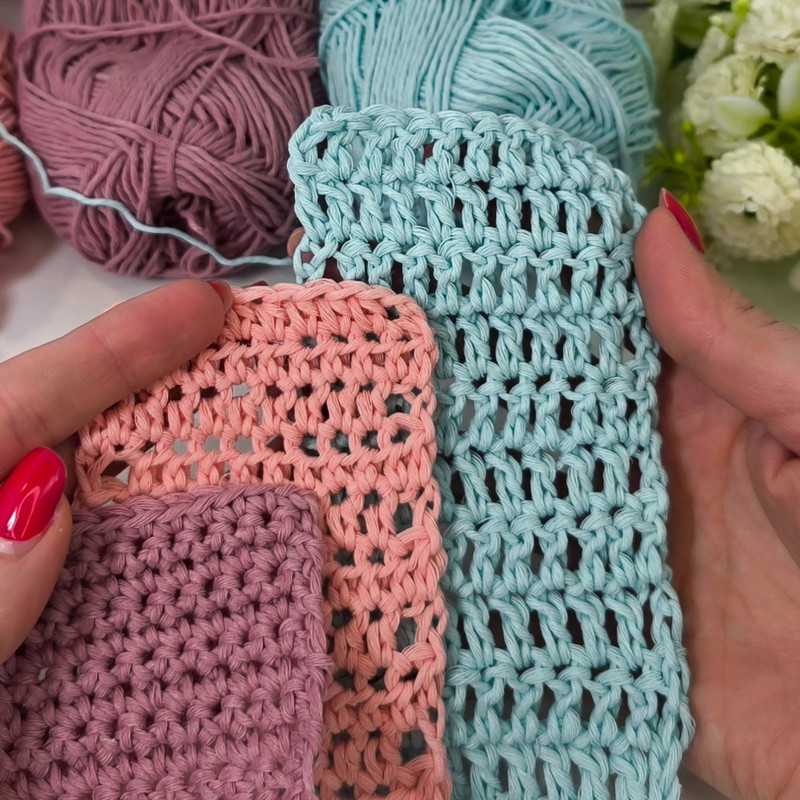
    These 3 stitches are the foundation of almost every crochet project, giving you endless possibilities for creativity and design. Whether you’re just starting to crochet or already have experience, learning the single crochet (SC), half-double crochet (HDC), and double crochet (DC) will set you up for success. These essential stitches provide versatility in texture, structure, and style, making them a must-know for any crocheter. Below, we’ll give you an overview of each stitch and provide links to in-depth guides to help you perfect your technique.

    These 3 Stitches Are a Must-Know for Every Crocheter

    1. Single Crochet (SC) – First of These 3 Stitches

    Single Crochet

    The single crochet stitch (SC) is the simplest and most compact of the three. It creates a tight, dense fabric that is perfect for sturdy projects such as washcloths, amigurumi, and blankets. This stitch is ideal for beginners due to its ease of execution and structured appearance.

    ➡️ Read the full guide: How to Master the Single Crochet Stitch


    2. Half-Double Crochet (HDC)

    Half-Double Crochet

    The half-double crochet stitch (HDC) is a great middle ground between the single and double crochet stitches. It offers a balance of flexibility and structure, making it ideal for garments and soft textures. With its slightly taller and looser stitch pattern, it works well for hats, scarves, and baby items.

    ➡️ Read the full guide: How to Master the Half-Double Crochet Stitch


    3. Double Crochet (DC)

    Double Crochet

    The double crochet stitch (DC) is one of the most commonly used stitches in crochet. It is taller and more open than the previous two stitches, making it perfect for lacework, blankets, and fast-growing projects. The DC stitch allows for quicker project completion while maintaining a structured look.

    ➡️ Read the full guide: How to Master the Double Crochet Stitch


    Final Thoughts

    Mastering these three fundamental stitches—single crochet, half-double crochet, and double crochet—will set you up for success in countless crochet projects. Whether you’re creating sturdy amigurumi, soft scarves, or beautiful lace patterns, these stitches provide the perfect foundation for your crochet journey.

    For more crochet tutorials, beginner-friendly patterns, and inspiration, visit our blog Blooming with Crochet!

    Happy Crocheting! 🧶

  • Double Crochet Stitch: Mastering the Basics for Beginners

    Double Crochet Stitch: Mastering the Basics for Beginners

    Crochet is an enriching and creative craft, and mastering its essential stitches is key to expanding your skillset. The double crochet (DC) stitch is one of the most commonly used stitches in crochet patterns. Therefore, learning it will open the door to countless projects. It is taller than the single and half-double crochet stitches, making it a great choice for projects that require a bit more height and flexibility. In this guide, you’ll learn how to work the double crochet stitch, avoid common mistakes, and explore the many ways you can use it in your crochet projects.

    Double Crochet Stitch: Mastering the Basics for Beginners

    What is a Double Crochet Stitch?

    The double crochet (DC) is a fundamental crochet stitch that creates a fabric that is slightly more open and flexible than single or half-double crochet. Because of its height and versatility, it’s often used in beginner crochet blankets, scarves, garments, and lacework. The DC stitch allows for quicker project completion while still maintaining a structured appearance.

    Materials Needed

    To practice double crochet, you’ll need the following materials:

    • Yarn – Medium-weight yarn is recommended for beginners.
    • Crochet Hook – A 5.0 mm (H-8) hook works well with most worsted-weight yarns.
    • Scissors – To trim your yarn when necessary.
    • Tapestry Needle – Helpful for weaving in yarn ends neatly.

    How to Make a Double Crochet Stitch

    Follow these step-by-step instructions to create a smooth and even double crochet stitch:

    Start with a Foundation Chain

    • Begin by making a chain of any number of stitches. Next, add an extra three chains to serve as the turning chain.

    Yarn Over (YO)

    • Wrap the yarn over your crochet hook before inserting it into the stitch.

    Insert Your Hook

    • Then, skip the first three chains from the hook and insert your hook into the fourth chain.

    Yarn Over and Pull Through

    • Wrap the yarn over the hook again and pull it through the stitch. You should now have three loops on your hook.

    Next, Yarn Over and Pull Through Two Loops

    • Wrap the yarn over once more and pull it through the first two loops on your hook. You will now have two loops remaining.

    Yarn Over and Pull Through the Last Two Loops

    • Wrap the yarn over once more and pull it through the remaining two loops. This completes one double crochet stitch!

    Repeat Across the Row

    • Continue inserting your hook, yarning over, and pulling through until you reach the end of the row.

    Turning Your Work

    • To start a new row, chain three (this counts as your first DC stitch), turn your work, and begin double crocheting into the next stitch.

    Common Mistakes and How to Fix Them

    • Loosely Structured Stitches – If your DC stitches appear too loose, adjust your yarn tension for a more even look.
    • Skipping Stitches – Always count your stitches at the end of each row to ensure consistency.
    • Uneven Edges – In addition, make sure you insert your hook into the correct stitch at the start and end of each row to maintain a straight edge.

    For more visual guidance, check out this YouTube search for double crochet stitch tutorials.

    Why You Should Master the Double Crochet Stitch

    The double crochet stitch is a game-changer for beginners looking to enhance their crochet abilities. It allows you to create lightweight and airy projects, making it perfect for crochet blankets for beginners, summer tops, and decorative shawls. Mastering the DC stitch will also make it easier to transition into more advanced techniques.

    Popular Uses of the Double Crochet Stitch

    • Crochet Blankets for Beginners – A great stitch for fast and soft blanket-making.
    • Garments & Sweaters – Used in lacy and structured clothing patterns.
    • Scarves & Shawls – Ideal for creating warm yet breathable accessories.
    • Granny Squares – The foundation for classic granny square projects.
    • Openwork Patterns – Frequently used in lace and mesh designs for a delicate effect.

    Next Steps in Your Crochet Journey

    Now that you’ve learned the double crochet stitch, you can explore even more advanced techniques such as the single crochet and half-double crochet. As a result, your projects will become more creative and versatile.With patience and practice, you’ll be able to craft stunning handmade items that bring both comfort and creativity into your crochet journey.

    For more beginner-friendly crochet tutorials and patterns, visit our blog Blooming with Crochet!

    Happy Crocheting! 🧶