Author: admin

  • Crochet to Reduce Overwhelm: A Quiet Way to Calm Your Mind

    Crochet to Reduce Overwhelm: A Quiet Way to Calm Your Mind

    Crochet to reduce overwhelm might sound too simple to work.
    But when your mind won’t slow down, simple is exactly what helps.

    You’re not overwhelmed because you have too much to do.
    You’re overwhelmed because your mind never gets a real break.

    You finally sit down… your shoulders sink into the chair.
    And for a second, it looks like rest.

    But your mind? Not even close.

    It keeps going.
    What’s left. What’s next. What you forgot.
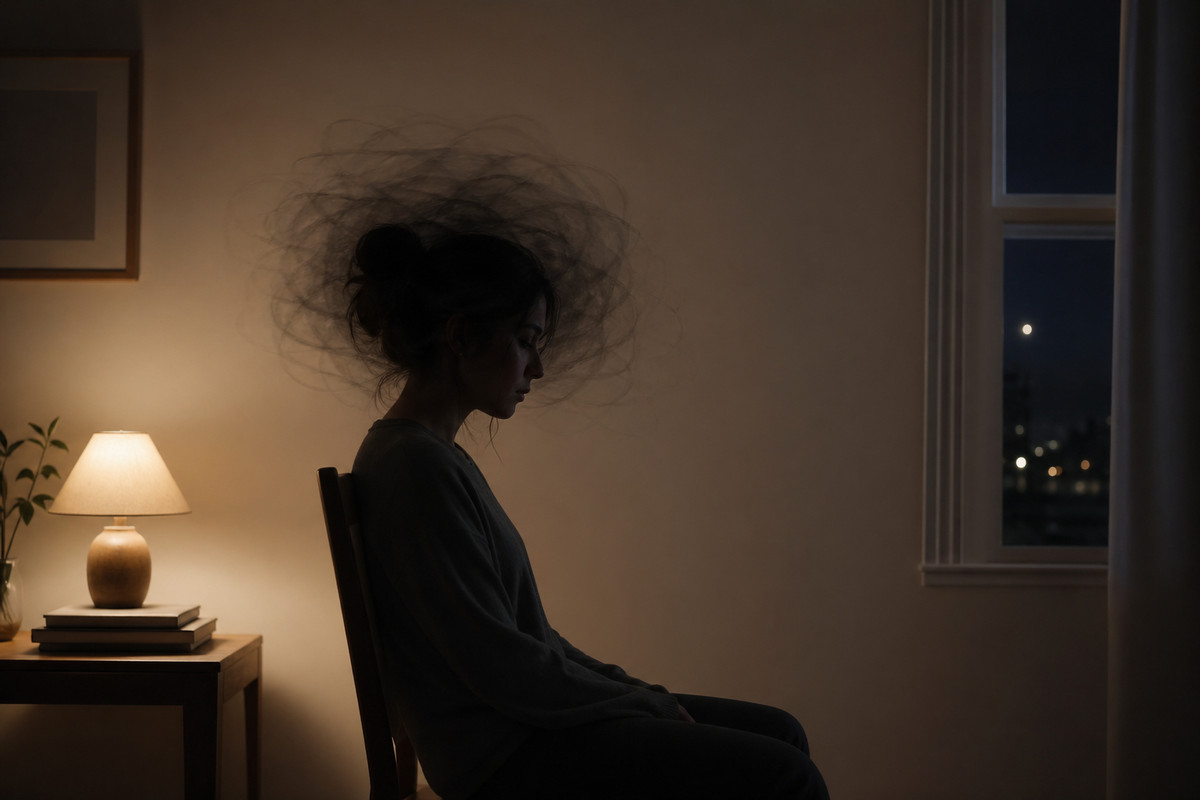
    It hums quietly in the background, like a fridge you didn’t notice until the room got still.

    After a while, you start wondering if something’s wrong with you.
    Like… shouldn’t you be able to handle this better by now?


    Quick check

    Don’t overthink this. Just notice what hits.

    Do you finish things, but your mind keeps going anyway?
    Do you try to rest, but still think about what you should be doing?
    Do you feel guilty when you’re not being productive?
    Do you tell yourself you just need to organize better (again)?
    Do you avoid starting small things because they won’t be “perfect”?
    Do you feel tense even when everything looks fine from the outside?
    Do you feel like you don’t need more advice — just a quiet mind?

    If you caught yourself nodding even once… yeah. This is you.


    What’s actually happening

    It’s not your to-do list.

    Nothing ever feels finished in your head.

    You complete something… and your brain immediately pulls up the next thing.
    No pause. No “good job.” No “you can stop now.”

    It’s like finishing a task, but no one ever says you’re done.
    So you just stand there, waiting for the next instruction — even when there isn’t one.

    Of course your mind stays on.
    It never got permission to turn off.

    That’s not you failing.
    That’s just how your brain is trying to keep up.


    Why rest doesn’t really work

    You try, though.

    You sit down. You scroll. You lie in bed and stare at the ceiling like it might give you answers.

    But your mind keeps going behind the scenes.

    You replay conversations.
    You plan tomorrow.
    You fix things that didn’t even happen yet (very productive, by the way).

    Your brain is trying to close all those open loops.

    So when you get up, you’re still tired.
    Not the “I need sleep” kind — more like a heaviness behind your eyes.

    Then comes that familiar thought:
    “I just wasted time.”

    You probably even tell yourself you’ll “just rest for a minute”—
    and then spend that minute arguing with your own thoughts instead of actually resting.

    So you go back to doing.

    Not because you want to.
    But because sitting in that mental noise feels harder.


    Where crochet fits (and why this feels different)

    You don’t need another task.
    Honestly, you’d probably like to return a few.

    This is different. This is where crochet to reduce overwhelm starts to make sense.

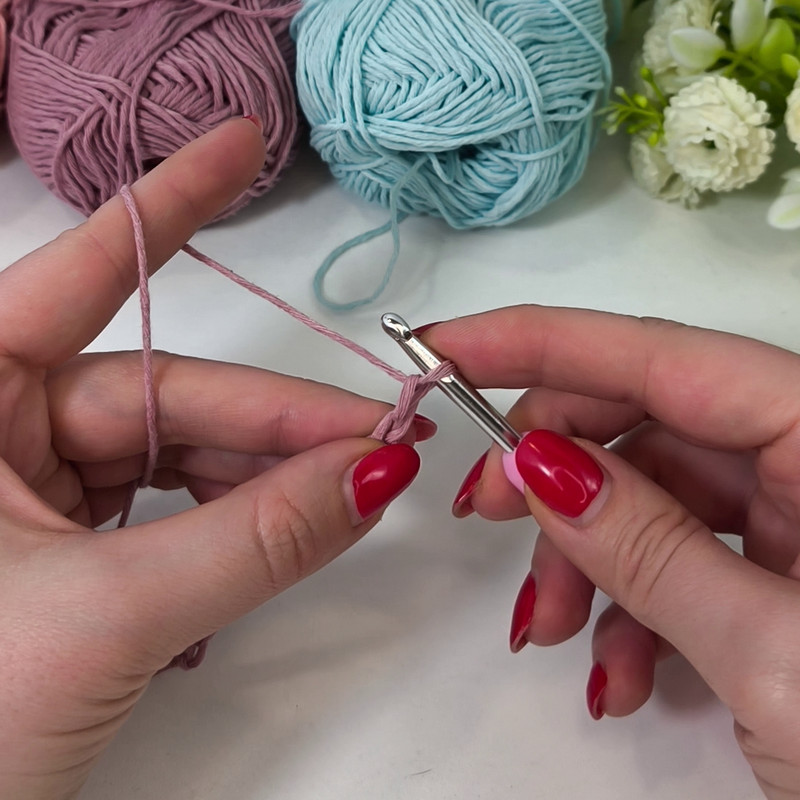
    Crochet gives your hands something small and steady to do.
    And that matters more than it sounds.

    When your hands repeat one simple movement, your mind has less space to jump all over the place.

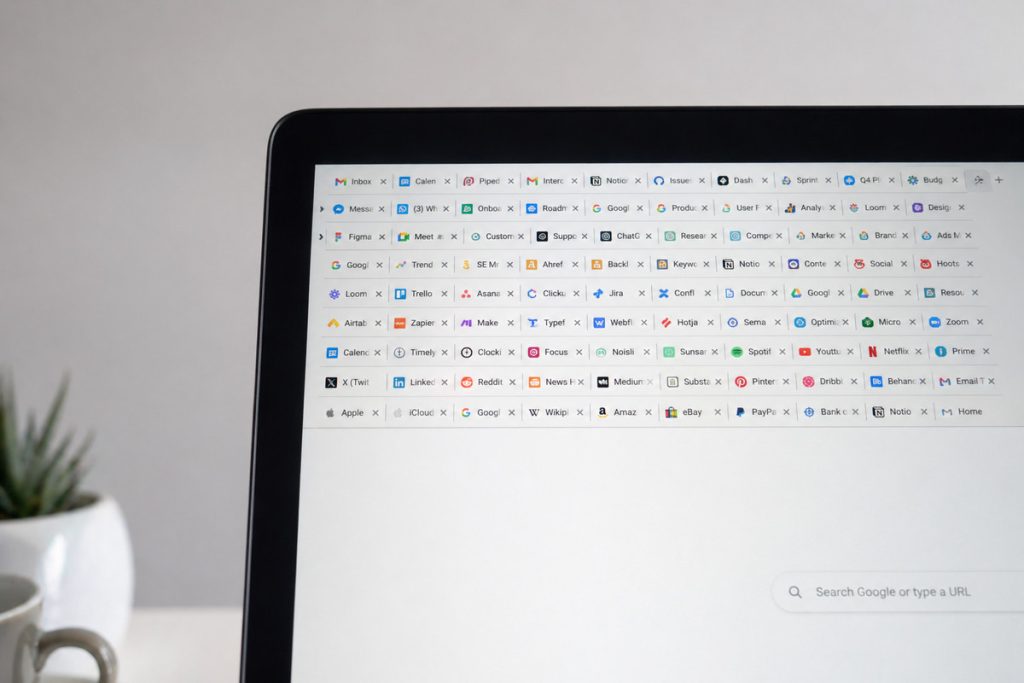
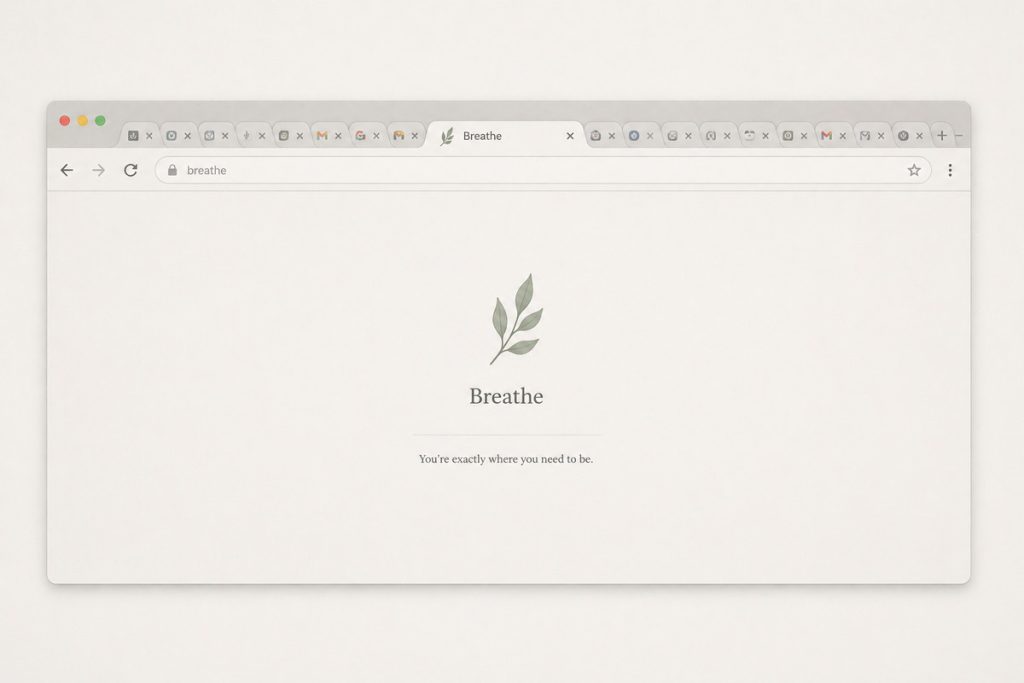
    It’s like having ten tabs open in your head, all making noise at once.
    Crochet doesn’t slam them shut.

    It just opens one quiet tab… and the rest slowly fade into the background.

    You’re not forcing yourself to relax.
    You’re just… not feeding the chaos.

    Same movement. Again and again.
    Yarn sliding softly through your fingers.

    Nothing urgent. Nothing to prove.

    For a moment — a small one, but real — your mind has somewhere to land.

    If you’re just starting, a simple beginner crochet pattern is more than enough.


    How crochet to reduce overwhelm actually works

    Your brain is constantly scanning.
    What’s next? What’s wrong? What’s unfinished?

    Repetition changes the pace.

    When you do the same simple movement, nothing new is happening.
    There’s nothing to solve and nothing to fix.

    So your system slowly stops acting like everything is urgent.

    Your attention shifts — not because you force it, but because your hands are busy doing something calm and steady.

    That’s why people often feel better after crocheting.
    Not because they ran away from their thoughts…
    but because the thoughts finally slowed down enough to breathe.

    Research shows this too*. People report feeling calmer, lighter, and more stable after crocheting. Their mood improves.

    That’s the real power of crochet to reduce overwhelm — not escape, but softening.


    A small start (that’s all this is)

    You don’t need more time.
    And you don’t need to do this “right”.

    This is not about becoming good at crochet.

    This is about giving your mind a moment where it doesn’t have to carry everything.

    Five minutes is enough.
    Messy stitches? Also fine.
    Stopping halfway? Completely allowed.

    You’re not building something perfect here.

    You’re giving yourself a small, quiet pause.
    The kind your mind has been asking for… just not very politely.

    And honestly?

    You don’t need to fix everything today.
    You don’t need to catch up on your whole life tonight.

    You can just pick up a piece of yarn…
    make one loop… then another…

    and let that be enough for now. 🧶

    Notes

    * P. Burns, R. Van Der Meer (2021) Happy Hookers: findings from an international study exploring the effects of crochet on wellbeing. Perspectives in Public Health: Formerly Journal of the Royal Society for the Promotion of HealthVolume 141, Issue 3

  • Crochet for Overwhelm: Calm Your Mind in 5 Quiet Minutes

    Crochet for Overwhelm: Calm Your Mind in 5 Quiet Minutes

    Crochet for overwhelm can give your mind a place to slow down—even in just five quiet minutes.

    You finally sit down. Your shoulders drop a little, like they’ve been holding tension all day.

    Okay, now I’ll rest.

    But your mind doesn’t get the memo.

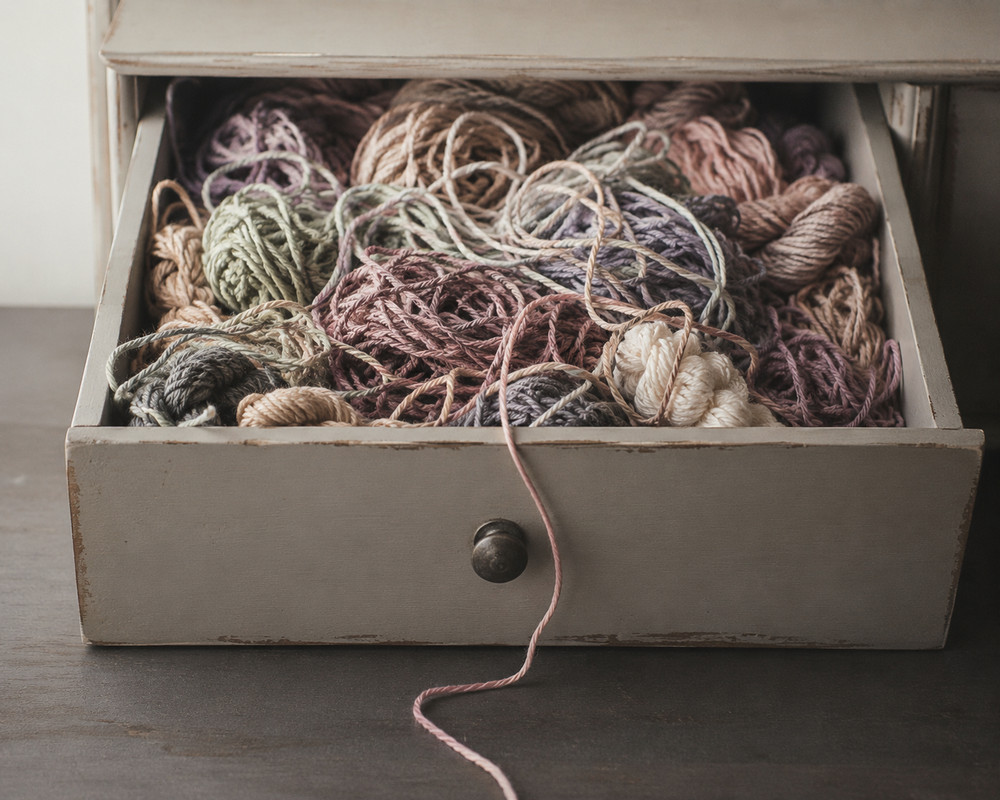
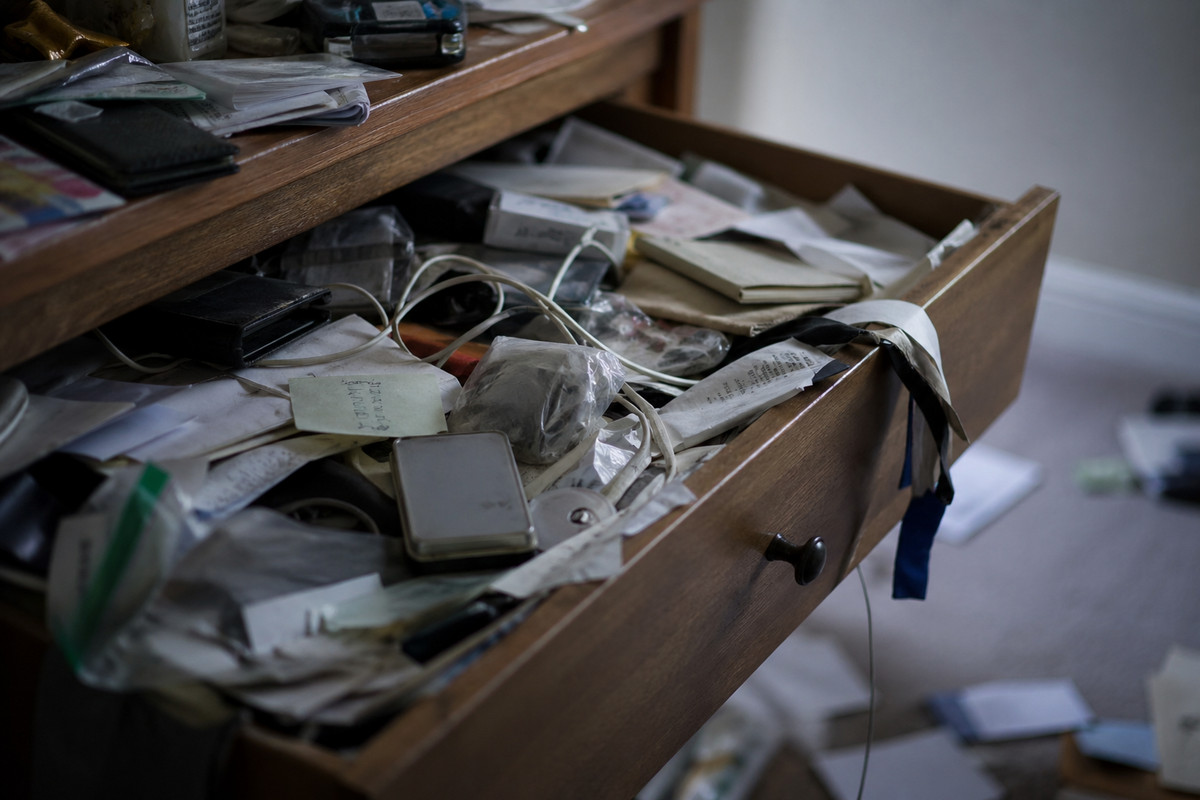
    What you didn’t finish, what you forgot, what’s waiting for you—it all keeps going. One thought pulls in another, like opening a messy drawer “just for a second.”

    crochet for overwhelm messy drawer mental clutter

    And suddenly, you’re not resting. You’re just… sitting there, still carrying everything. Your chest a bit tight, your thoughts a bit loud.

    Here’s the part no one really tells you:

    Your mind doesn’t calm down just because you stop.
    It needs something to hold onto.

    That’s where crochet helps.
    Not as a hobby you need to be good at. Not another thing to “do properly.”
    Just something simple that gives your thoughts a softer place to land.


    When everything feels too much

    Right now, it probably doesn’t feel like you just have “a lot to do.”

    It feels like everything is happening at once—in your head.

    You finish one thing, and your mind is already halfway into the next. You try to focus, but something else tugs at you. Even when nothing urgent is happening, your thoughts keep pacing back and forth.

    You’re never fully here.

    And when you finally get a moment for yourself, it doesn’t feel like relief. It feels… awkward. Like you can’t quite sink into the chair. Like you should be doing something else.

    You might even feel a little frustrated with yourself—like, why can’t I just relax for a second? Why is this so hard?

    You feel tired—even if your body didn’t do that much.
    Your mind has been running laps all day.


    Why “just rest” doesn’t work

    You’ve probably tried to slow down.

    Maybe you told yourself, just sit for a bit. Maybe you even stared at the ceiling, hoping something would click.

    But the moment you stop, your thoughts get louder.

    Nothing is holding your attention anymore—that’s why this happens. So your mind fills that space with everything it’s been juggling.

    And then—you grab your phone. Or turn on something. Anything.

    And part of you already knows it won’t really help—but you do it anyway, because it’s the easiest way to escape the noise for a moment.

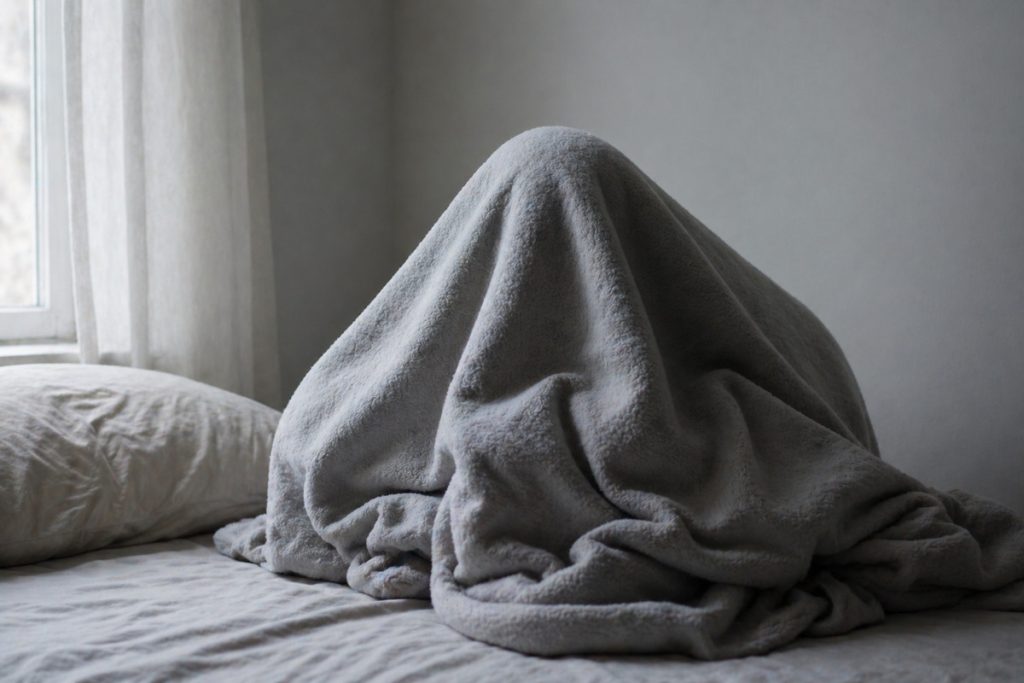
    Distraction is like putting a blanket over the noise. It muffles it for a moment, but it’s all still there underneath.

    crochet for overwhelm hiding under blanket quiet escape

    What your mind actually needs

    So what does help?

    Not more space.
    Not more advice.
    Definitely not more pressure to “relax properly” (as if that’s even a thing).

    Your mind needs something simple to focus on.

    Right now, your thoughts are scattered. They keep jumping because there’s no clear place to land.

    It’s like having too many browser tabs open—everything is still running, even the ones you forgot about. And your system just… slows down.

    crochet for overwhelm too many tabs mental overload

    Something small and repetitive helps.

    Because repetition gives your mind a rhythm.
    And rhythm quietly replaces the chaos.


    How crochet helps

    This is where crochet for overwhelm becomes different from simple distraction.

    You don’t have to think much. Which, honestly, is a relief.

    You hold the yarn, soft between your fingers. You make one stitch. Then another.

    Your hands move in a steady, almost gentle rhythm. And your attention follows without you having to force it.

    You’re not wrestling your thoughts into silence.
    You’re just giving them somewhere else to go.

    One stitch.

    Then the next.

    You’re not fixing your whole day. You’re not solving your life.
    You’re just… here.

    And after a few minutes, something shifts.

    Your thoughts are still there, but they’re not pulling you in ten directions anymore. They slow down. Soften a bit.

    crochet for overwhelm hand relaxing from tension to calm

    You feel a little more grounded. Your breathing eases, almost without asking.

    It’s not magic.

    But it helps.


    A moment I remember

    I remember one evening when I felt exactly like this.

    Nothing big happened. Just too many small things stacking up quietly. Messages I hadn’t answered. Things I needed to finish. Thoughts that kept looping like a song stuck on repeat.

    I sat down, thinking I would rest.

    But the moment I did, everything got louder.

    I didn’t have the energy to do anything “useful,” but I also couldn’t just sit there with that noise.

    So I picked up my yarn.

    No plan. No idea what I was making.

    Just a few stitches.

    At first, nothing changed. My thoughts were still busy doing their thing.

    But my hands kept moving. That small, steady motion repeats again and again.

    One stitch. Then the next.

    And slowly, without me forcing anything, it got quieter.

    Not silent. Not perfect.

    But manageable. Like the volume turned down just enough.

    That was enough.

    It clicked for me then: this isn’t really about making something at all.

    It’s about having somewhere to return when your mind feels too full.


    Why repetition helps

    You might be wondering—why does this even work?

    It’s simpler than it sounds.

    When you repeat the same movement, your brain doesn’t have to keep making decisions.
    And fewer decisions mean less mental strain.

    At the same time, your focus shifts from your thoughts to something real—your hands, the yarn, the stitch.

    And that shift matters.

    Because overthinking lives in your head.
    But this gently pulls you out of it.

    Simple, repetitive things often feel calming—even if they look almost too simple to matter.

    crochet for overwhelm repetitive pattern calming rhythm

    Studies have shown* that crochet can support mental well-being, with many people using it to manage life challenges such as grief, chronic illness, and pain—confirming the role of repetitive movements in reducing stress.

    That’s why crochet for overwhelm works—it reduces the need for constant mental decisions.


    How to start (without pressure)

    If you’re thinking, this sounds nice, but I don’t have time or energy for this—I get it.

    This is exactly why this works.

    You don’t need energy for crochet for overwhelm—you just need a few quiet minutes.

    No big project.
    No plan.
    No “I have to do this right.”

    Just a few minutes.

    Sit down. Take the yarn. Hold the hook. Make a few stitches.

    That’s it.

    Even five minutes can be enough to take the edge off the overwhelm.
    Because your mind doesn’t need hours—it just needs a small signal that it can slow down.

    And one more thing—this matters:

    Don’t turn this into a task.

    You’re not doing this to be productive.
    You’re doing this to feel a little more okay.

    And when your thoughts come back—and they will—that’s not a failure.

    You don’t have to stop them.

    You just return to the next stitch.

    That’s it.

    You don’t have to fix everything today.

    You just need one small moment where things feel a little quieter.


    In short

    Sometimes, crochet for overwhelm is enough to soften the noise in your head. When your mind feels like too much, don’t force it to be quiet.
    Give it something simple to follow—and let it slow down on its own. 🤗

    Notes

    * P. Burns, R. Van Der Meer (2021) Happy Hookers: findings from an international study exploring the effects of crochet on wellbeing. Perspectives in Public Health: Formerly Journal of the Royal Society for the Promotion of Health. Volume 141, Issue 3

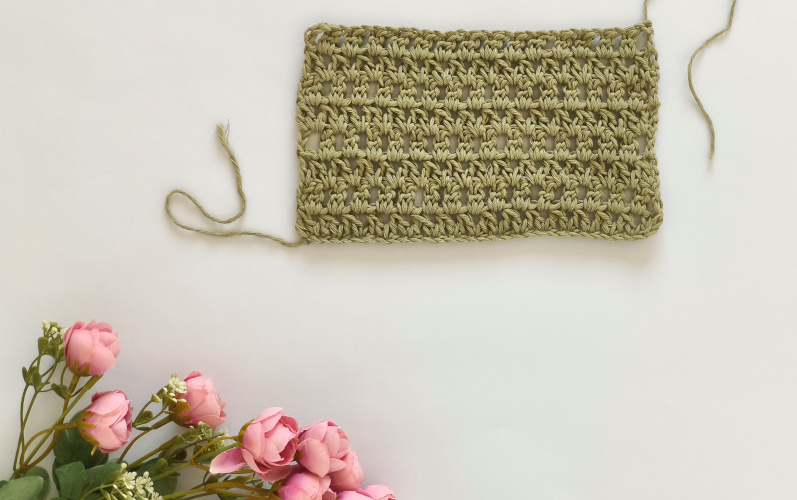
  • Beginner Crochet Pattern #3 | Gentle, Repetitive Stitches for a Calm Mind

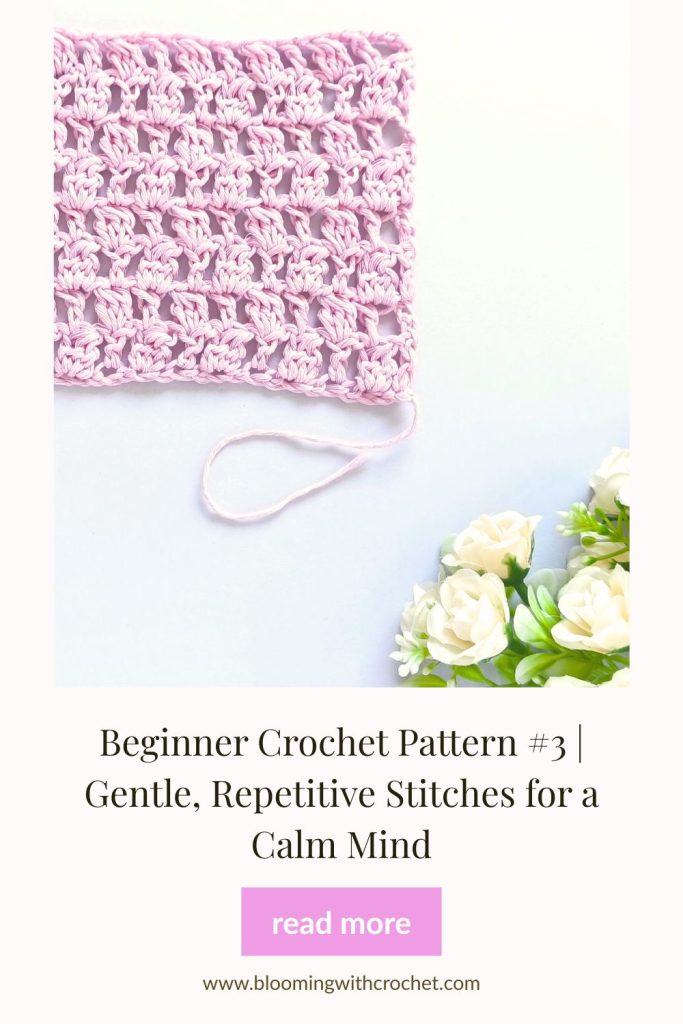
    Beginner Crochet Pattern #3 | Gentle, Repetitive Stitches for a Calm Mind

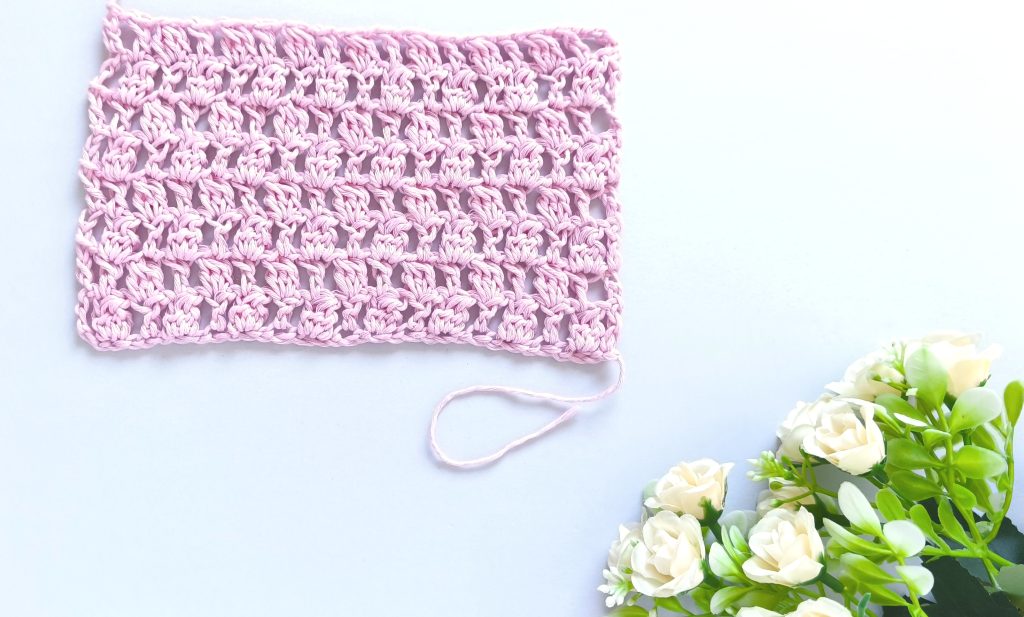
    Beginner Crochet Pattern can be a quiet way to slow your mind when it won’t stop.

    Your mind doesn’t stop—even when you do. You sit down, maybe with your phone in your hand, the screen softly glowing against your fingers, thinking this is the moment you’ll finally rest… and then your thoughts start lining up like impatient little voices—what you didn’t finish, what’s waiting tomorrow, what might fall apart if you let go for even a second—and somehow you end up trying to keep track of all of it at once, like juggling things no one even asked you to hold.
    You might even catch yourself feeling guilty for sitting still, like resting is something you have to earn first, and that quiet pressure just doesn’t let you switch off.

    This video is for you in that exact moment.

    Gentle, Repetitive Stitches for a Calm Mind

    This is a crochet tutorial you can just follow. A beginner crochet pattern, simple enough that you don’t have to overthink it. You go step by step. That’s it. Basic crochet stitches, repeating in a steady rhythm, so your brain doesn’t have to keep jumping ahead or solving anything. And that matters more than it sounds, because that constant “figuring things out” is what’s wearing you down.

    The point here isn’t what you make.

    It’s what happens while you’re making it.

    As you repeat the same simple crochet pattern, your hands start to move in a quiet, steady way, the yarn sliding gently over your fingers, and it’s almost like tracing the same small circle again and again. Nothing surprising. Nothing urgent. Just… this. And without you forcing anything, your mind starts to loosen its grip a little, like someone slowly turning down the volume in the background.

    You might notice at some point that you’re not chasing every thought anymore. They’re still there, sure—but you’re not glued to them. Your attention shifts. You’re watching your hands, feeling that small, soft pull of the yarn with each stitch, and for a moment, that’s enough. That’s what this repetitive crochet does—it gives you a gentle way out of that mental loop, like stepping off a spinning carousel instead of trying to stop it mid-spin (which, let’s be honest, never works well).

    It doesn’t matter if you’ve never done this before. That’s why this is crochet for beginners. And if you have, even better—you can use it as calming crochet when your mind gets loud again. This is slow crochet. Mindful crochet. Something simple you can come back to when everything feels a bit too much, because here, nothing unexpected is waiting for you. No decisions. No pressure. Just the same small movement, over and over.

    If that familiar thought shows up—“I don’t have time for this” or “this should look better”—just notice it and keep going, feeling the hook turn lightly between your fingers. You don’t need to argue with it. You don’t need to fix it. Because the moment you stop to make everything perfect, you’re right back in that same loop you were trying to step out of.

    Beginner Crochet Pattern

    If you came here looking for crochet for anxiety, this is it.

    Not some big, life-changing fix. Just a small, quiet pocket of time that’s yours. A place where your mind can slow down for a few minutes—like stepping into a room where nothing is expected from you.

    If you feel like continuing, you can gently explore these beginner crochet patterns too.

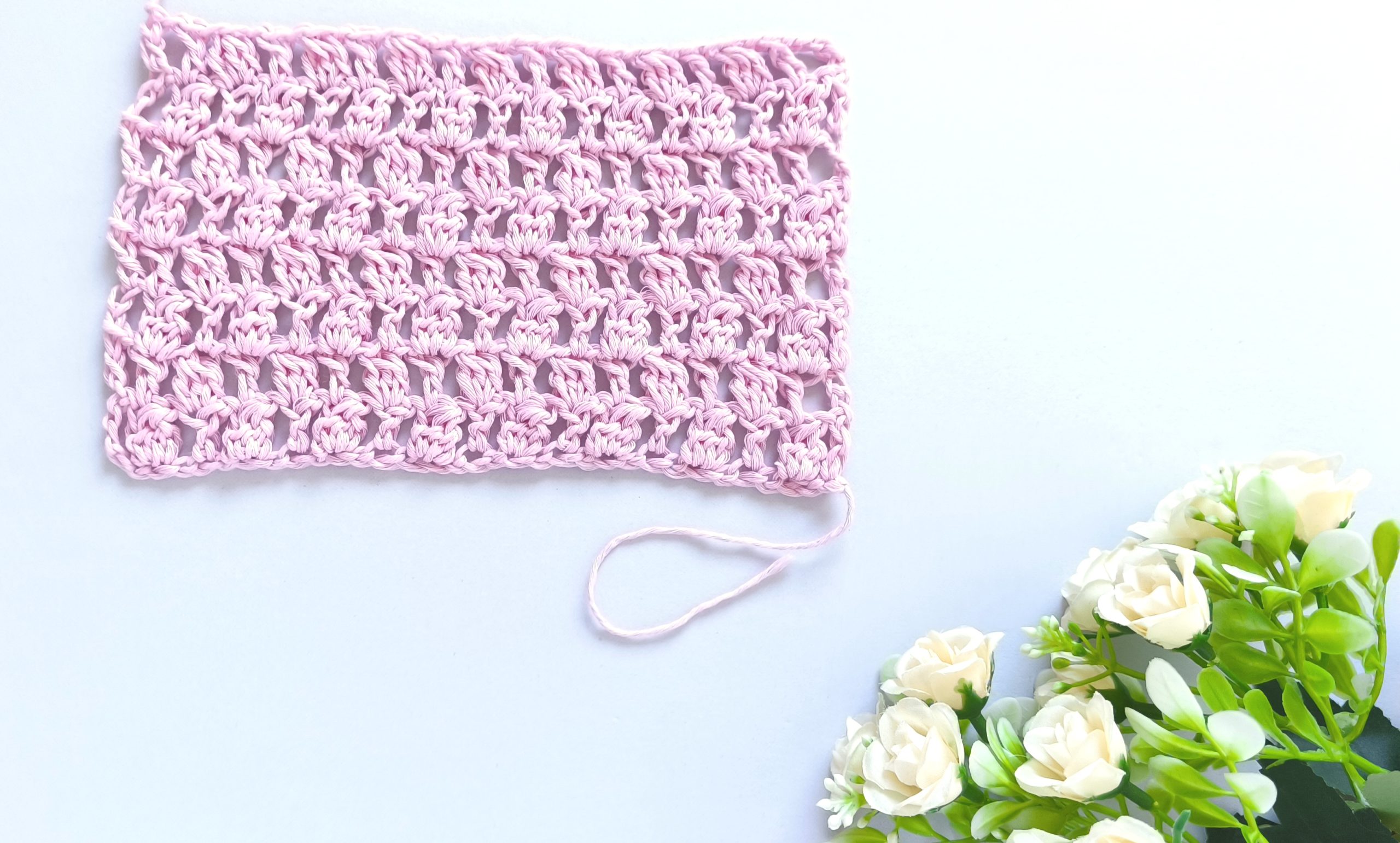
    Pattern:

    Chain 37. This will be your foundation chain.

    Dc3tog in 7th chain from the hook. Ch1.

    Repeat the pattern as follows: skip 1 chain, dc in next, ch1, skip 1 chain, dc3tog in next, ch1.

    Dc in the last chain.

    Ch4 and turn your work.

    Repeat the pattern as follows: Dc in dc3tog, ch 1, dc3tog in dc, ch1.

    Dc in 6th chain of 7ch group of previous row.

    Chain 4, and turn your work.

    Repeat the pattern as follows: dc3tog in dc,ch1, dc in dc3tog, ch1.

    Dc in 3rd chain of 4ch group of the previous row.

    Just keep repeating rows 2 and 3 until it’s as long as you want.

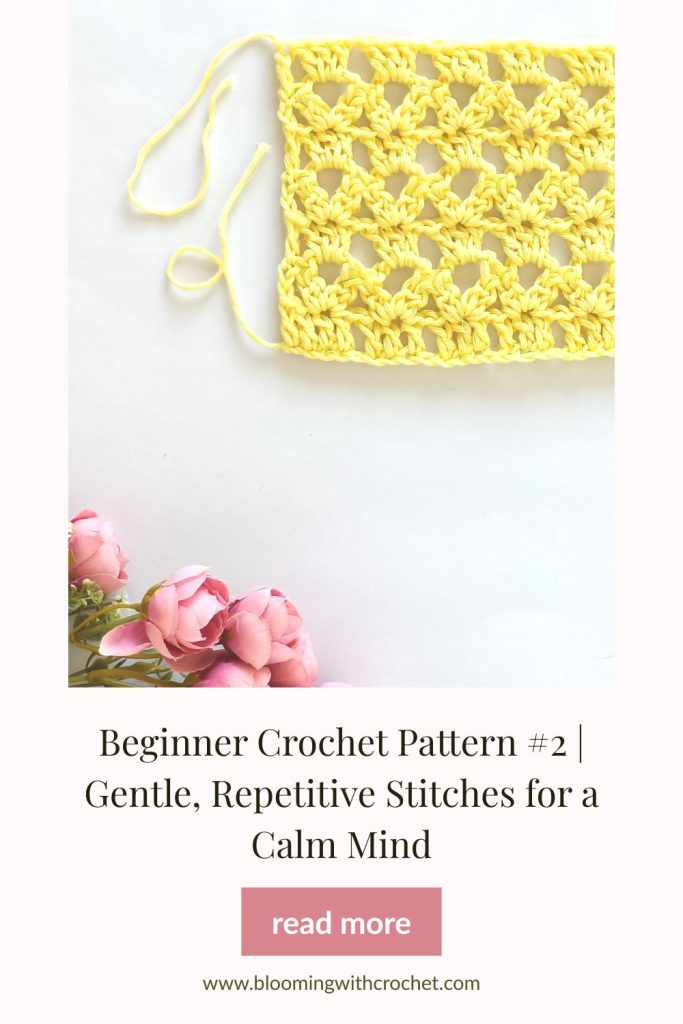
  • Beginner Crochet Pattern #2 | Gentle, Repetitive Stitches for a Calm Mind

    Beginner Crochet Pattern #2 | Gentle, Repetitive Stitches for a Calm Mind

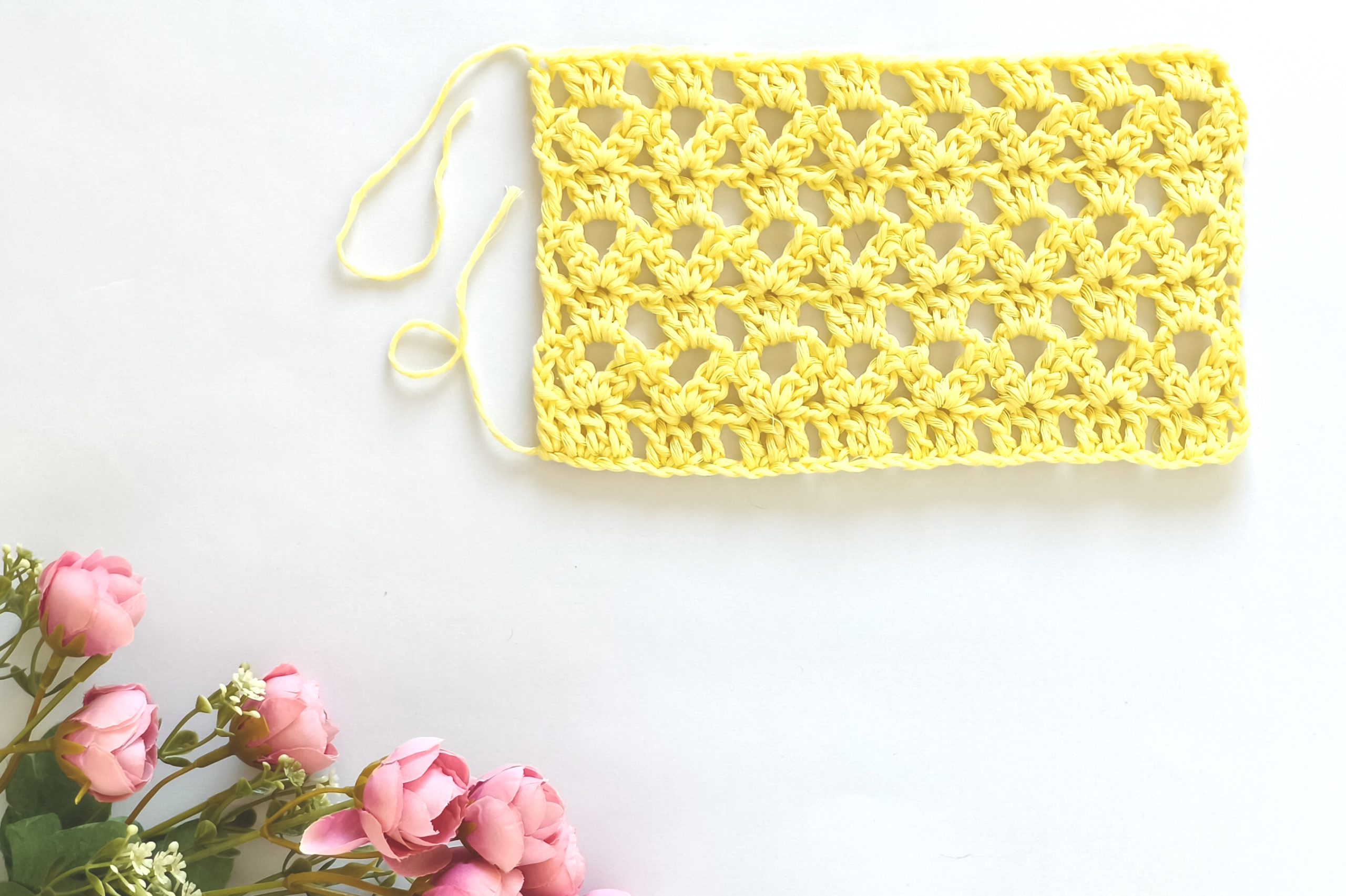
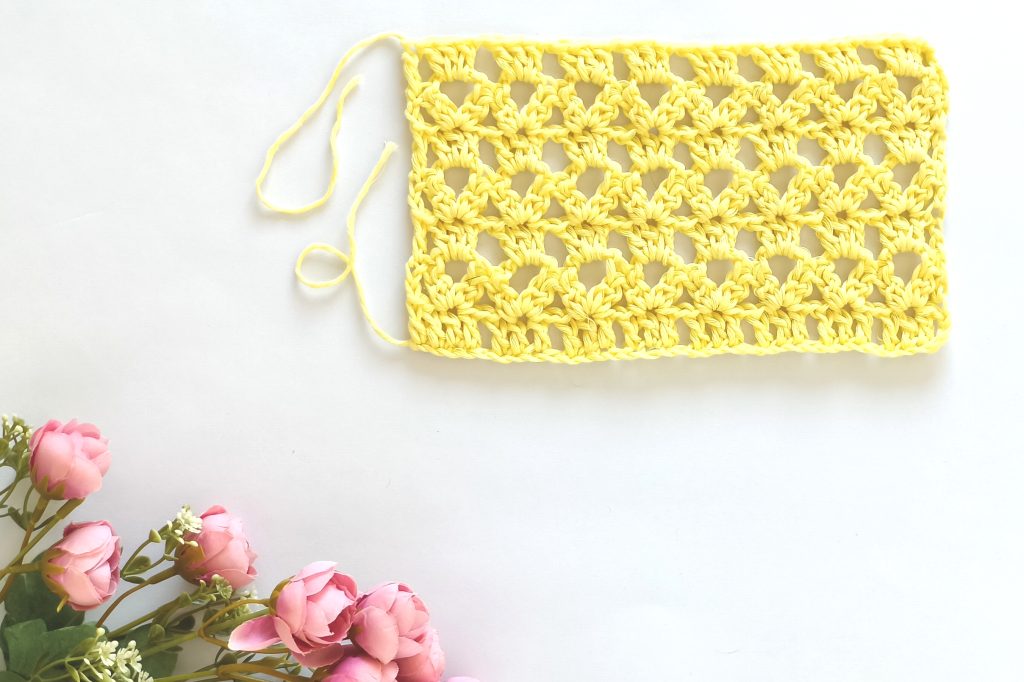
    This beginner crochet pattern gives your hands something simple to follow, so your thoughts can slow down, even for a moment.

    Your mind doesn’t stop, even when you sit down to rest.
    You notice it immediately.

    Your body is still, but your shoulders stay slightly tense.
    Your thoughts keep running, like ten browser tabs that refuse to close.
    They refresh on their own.

    It’s exhausting.
    Not because you can’t handle things, but because you never really pause.

    You probably catch yourself thinking, “just one more thing.”
    Then another. And another.
    Rest never really happens.

    Gentle, Repetitive Stitches for a Calm Mind

    A simple crochet pattern can help here, not as one more thing on your to-do list, but as something quiet you can hold onto, because when you repeat the same small movement, pulling the yarn through the loop and feeling it slide softly between your fingers, your focus starts to drift out of your head and into your hands, and your thoughts don’t disappear, but they do get a bit quieter and a bit less pushy.

    beginner crochet pattern

    In this beginner crochet pattern tutorial, you don’t need experience, really, it’s crochet for beginners, just how to crochet step by step, using basic crochet stitches and repeating the same rows, and that repetitive crochet is the key part, because your mind finally gets something simple and steady to follow, like counting stitches one by one instead of running through every possible “what if” in your life.

    You don’t need a lot of time for this, and you don’t need to get it perfect, this is a simple crochet pattern, more like slow crochet and mindful crochet, where your only job is to stay with the movement, one stitch at a time, almost like a quiet rhythm your hands understand even when your mind is a bit all over the place, and that’s what helps you stay here instead of getting pulled back into everything else.

    This is calming beginner crochet pattern, relaxing crochet, and even if nothing big changes today, it gives you a small, quiet corner that feels just a little lighter, like turning down the volume on that constant background noise, especially if you’re looking for crochet for anxiety, because for a few minutes, you’re not fixing anything, you’re just… here, and that’s more than enough.

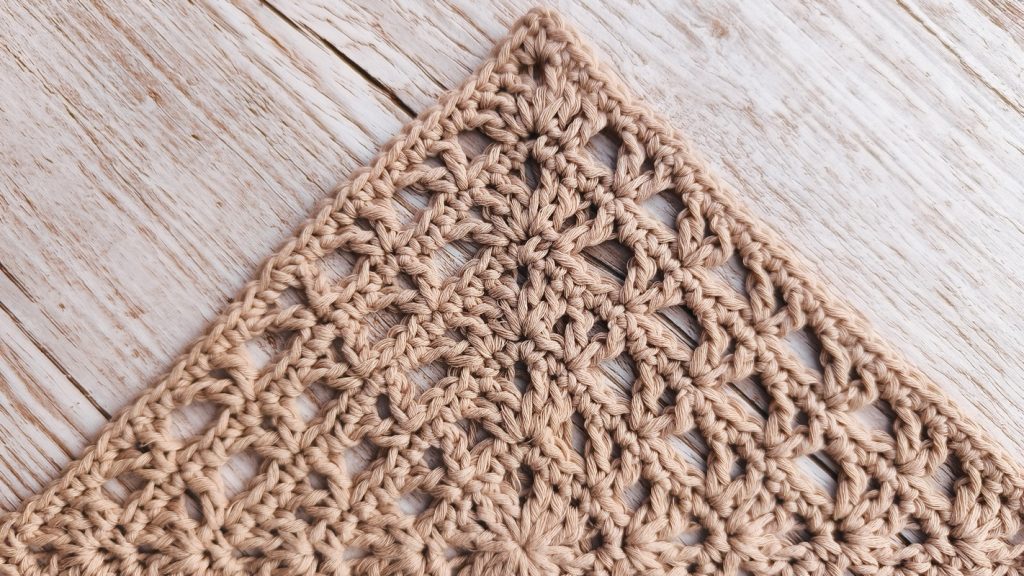
    You can also try this simple crochet square pattern.

    Pattern:

    Chain 36. This will be your foundation chain.

    Dc in 5th ch from the hook. Dc in next 2 chains. Ch1. Repeat the pattern as follows: Skip 1 chain, dc in next 3 chains. Dc in the last chain.

    Chain 3 and turn your work. Dc2tog in 3rd dc, ch4, dc2tog in the same dc.

    Repeat the pattern as follows: [dc2tog, ch4, dc2tog] in 2nd dc of 3 dc group.

    Dc in 3rd ch of 3ch group of previous row.

    Chain 3 and turn your work.

    3dc in next chain space.

    Repeat the pattern as follows:

    Ch1, 3dc in next chain space.

    Dc in 3rd chain of 3 chains group of the previous row.

    Just keep repeating rows 2 and 3 until it’s as long as you want.

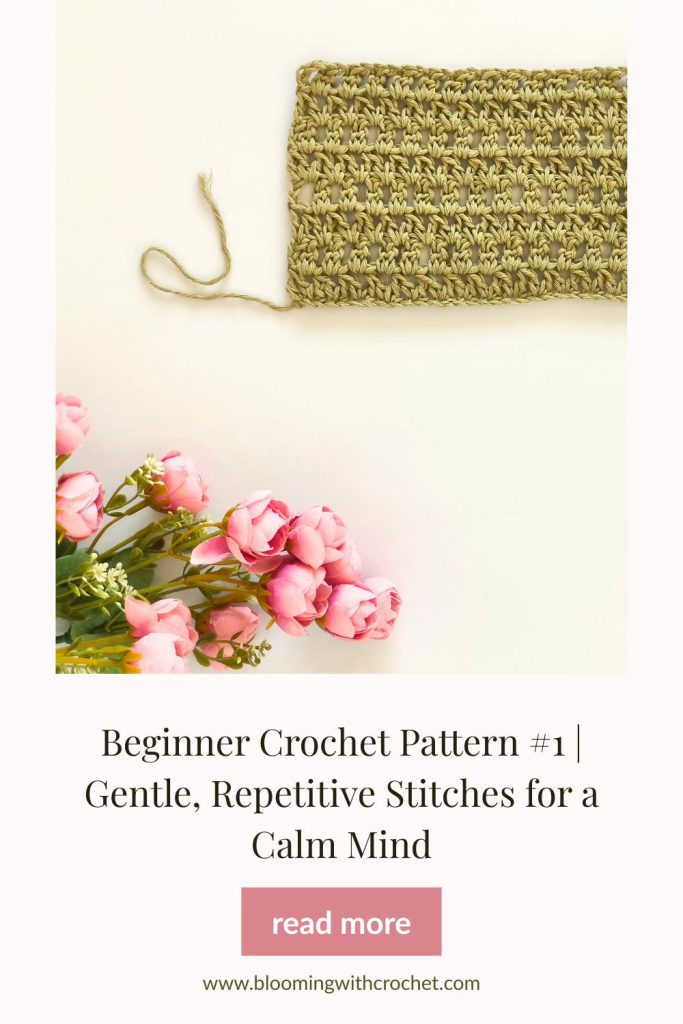
  • Beginner Crochet Pattern #1 | Gentle, Repetitive Stitches for a Calm Mind

    Beginner Crochet Pattern #1 | Gentle, Repetitive Stitches for a Calm Mind

    This beginner crochet pattern is simple on purpose — because your mind doesn’t need more to think about, it needs less.

    You don’t have to figure anything out here. This easy crochet pattern is made of small, repeatable steps that are easy to follow, so your attention can stay in one place instead of jumping around like ten tabs open in your head at once.

    Gentle, Repetitive Stitches for a Calm Mind

    This crochet tutorial isn’t here to challenge you. It gives your mind something steady to hold onto so it can slow down, even just a little — because when your hands repeat the same movement, your focus begins to settle like your breathing softening when it finds a steady rhythm, while the yarn glides quietly under your fingers.

    If your head keeps going even when you finally sit down, if there’s that quiet pressure telling you to do more, finish more, think ahead — this repetitive crochet pattern gives you one simple place to return to. Nothing to solve. Nothing to get right. Just one stitch, then the next.

    repetitive crochet stitches calming process
beginner crochet pattern

    The beginner crochet pattern is simple on purpose. You need something predictable — something your brain doesn’t have to overthink — so your hands can keep moving while your thoughts slowly lose their edge.

    At the beginning, your mind might still wander. That’s normal. Just follow the steps and let the repetition do its quiet work.

    This isn’t about making something perfect. It’s about the rhythm. One stitch at a time. That’s where a bit of calm starts to sneak in.

    If you’re completely new, you can also start with this beginner crochet guide.


    You can stop whenever you want and come back when you need that quiet again.
    This pattern will still be here, steady and simple, waiting for your hands to pick it up again.

    Pattern:

    Chain 34.

    Dc in 5th chain from hook. Ch1

    Make dc2tog. 1st leg of dc2tog in the same ch as 1st dc, skip 1 ch, 2nd leg of dc2tog in next ch.

    Ch1, and repeat the process. 1st leg of dc2tog in the same ch as 2nd leg of previous dc2tog, skip 1 ch, 2nd leg of dc2tog in next ch.

    Do the last three chains as shown. You will have 1 chain left.

    Work the last dc2tog like this: make the 1st leg of dc2tog in the same ch as 2nd leg of previous dc2tog, and 2nd leg of dc2tog in the last chain.

    Ch3 (count as dc), turn. Dc2tog in the next chain space. Ch1.

    Repeat the pattern as follows: dc2tog in the next chain space, ch1.

    Dc2tog in the last chain space. Dc in the 4th chain of 4ch group.

    Chain 3 and turn your work.

    Do 1st leg of dc2tog in the same space as ch3. and the 2nd leg of dc2tog in the next ch sp. Ch1.

    Repeat the pattern as follows: 1st leg of dc2tog in the same ch sp as 2nd leg of previous dc2tog. 2nd leg of dc2tog in the next ch sp. Ch1.

    Work the last dc2tog as follows: 1st leg int the same ch sp as 2nd leg of prev dc2tog. 2nd leg in 3rd chain of 3ch gropu of prev row. Dc in the same chain.

    Chain 4 and turn your work. Dc 2 tog in the next ch sp. Ch1.

    Repeat as follows: dc2tog in the next chain space, ch1.

    Work the last dc2tog in the last ch sp. Ch1, dc in the 3rd ch of 3ch group of prev row.

    Chain 3, and turn your work. Dc in next ch sp. Ch1.

    1st leg of dc2tog in the same ch sp as prev dc. 2nd leg of dc2tog in the next ch sp. Ch1.

    1st leg of dc2tog in the same ch sp as 2nd leg of previous dc2tog 2nd leg of dc2tog in the next ch sp. Ch1.

    Now work the last dc2tog of this row as follows: 1st leg of dc2tog in the same ch sp as 2nd leg of prev dc. 2nd leg of dc2tog in 3rd ch of 4ch group of prev row.

    Continue the pattern by repeating rows 2, 3, 4, and 5 in the same order until you reach the desired length.

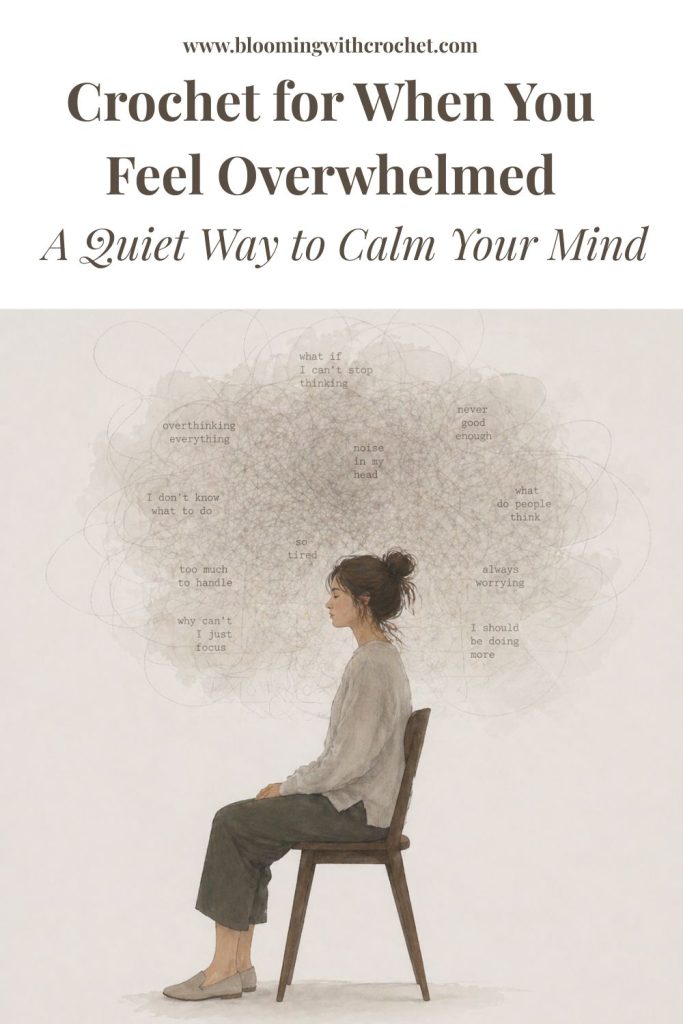
  • Crochet for When You Feel Overwhelmed: A Quiet Way to Calm Your Mind

    Crochet for When You Feel Overwhelmed: A Quiet Way to Calm Your Mind

    If you’ve been searching for crochet for when you feel overwhelmed, this might be exactly what you need — not another task, but a small moment of quiet.

    You’re not overwhelmed because you have too much to do.
    You’re overwhelmed because your mind never gets a real break.

    You finally sit down… your shoulders sink into the chair.
    And for a second, it looks like rest.

    But your mind? Not even close.

    It keeps going.
    What’s left. What’s next. What you forgot.
    It hums quietly in the background, like a fridge you didn’t notice until the room got still.

    After a while, you start wondering if something’s wrong with you.
    Like… shouldn’t you be able to handle this better by now?


    Quick check

    Don’t overthink this. Just notice what hits.

    Do you finish things, but your mind keeps going anyway?
    Do you try to rest, but still think about what you should be doing?
    Do you feel guilty when you’re not being productive?
    Do you tell yourself you just need to organize better (again)?
    Do you avoid starting small things because they won’t be “perfect”?
    Do you feel tense even when everything looks fine from the outside?
    Do you feel like you don’t need more advice — just a quiet mind?

    If you caught yourself nodding even once… yeah. This is you.


    What’s actually happening

    It’s not your to-do list.

    Nothing ever feels finished in your head.

    You complete something… and your brain immediately pulls up the next thing.
    No pause. No “good job.” No “you can stop now.”

    It’s like finishing a task, but no one ever says you’re done.
    So you just stand there, waiting for the next instruction — even when there isn’t one.

    Of course your mind stays on.
    It never got permission to turn off.

    That’s not you failing.
    That’s just how your brain is trying to keep up.


    Why rest doesn’t really work

    You try, though.

    You sit down. You scroll. You lie in bed and stare at the ceiling like it might give you answers.

    But your mind keeps going behind the scenes.

    You replay conversations.
    You plan tomorrow.
    You fix things that didn’t even happen yet (very productive, by the way).

    Your brain is trying to close all those open loops.

    So when you get up, you’re still tired.
    Not the “I need sleep” kind — more like a heaviness behind your eyes.

    Then comes that familiar thought:
    “I just wasted time.”

    You probably even tell yourself you’ll “just rest for a minute”—
    and then spend that minute arguing with your own thoughts instead of actually resting.

    So you go back to doing.

    Not because you want to.
    But because sitting in that mental noise feels harder.

    You’re not using crochet for when you feel overwhelmed to be productive — you’re using it to breathe.


    Where crochet fits when you feel overwhelmed

    You don’t need another task.
    Honestly, you’d probably like to return a few.

    This is why crochet for when you feel overwhelmed works differently.

    Crochet gives your hands something small and steady to do.
    And that matters more than it sounds.

    When your hands repeat one simple movement, your mind has less space to jump all over the place.

    It’s like having ten tabs open in your head, all making noise at once.
    Crochet doesn’t slam them shut.

    It just opens one quiet tab… and the rest slowly fade into the background.

    You’re not forcing yourself to relax.
    You’re just… not feeding the chaos.

    Same movement. Again and again.
    Yarn sliding softly through your fingers.

    Nothing urgent. Nothing to prove.

    For a moment — a small one, but real — your mind has somewhere to land.


    Why this actually helps

    Your brain is constantly scanning.
    What’s next? What’s wrong? What’s unfinished?

    Repetition changes the pace.

    crochet for when you feel overwhelmed calming hands with yarn

    When you do the same simple movement, nothing new is happening.
    There’s nothing to solve and nothing to fix.

    So your system slowly stops acting like everything is urgent.

    Your attention shifts — not because you force it, but because your hands are busy doing something calm and steady.

    That’s why people often feel better after crocheting.
    Not because they ran away from their thoughts…
    but because the thoughts finally slowed down enough to breathe.

    Research shows this too.*
    People report feeling calmer, lighter, and more stable after crocheting.
    Their mood improves.

    Not because of what they made.

    But because of how it felt while they were making it.


    A small start (that’s all this is)

    You don’t need more time.
    And you don’t need to do this “right”.

    This is not about becoming good at crochet.

    This is about giving your mind a moment where it doesn’t have to carry everything.

    Five minutes is enough.
    Messy stitches? Also fine.
    Stopping halfway? Completely allowed.

    You’re not building something perfect here.

    You’re giving yourself a small, quiet pause.
    The kind your mind has been asking for… just not very politely.

    And honestly?

    You don’t need to fix everything today.
    You don’t need to catch up on your whole life tonight.

    You can just pick up a piece of yarn…
    make one loop… then another…

    and let that be enough for now. 🧶

    If you don’t know where to start, you can begin with a simple beginner crochet pattern.

    Notes

    * P. Burns, R. Van Der Meer (2021) Happy Hookers: findings from an international study exploring the effects of crochet on wellbeing. Perspectives in Public Health: Formerly Journal of the Royal Society for the Promotion of HealthVolume 141, Issue 3

  • How Crochet Teaches Your Brain to Let Go of Stress

    How Crochet Teaches Your Brain to Let Go of Stress

    Do you ever feel like your thoughts are everywhere at once—like a radio stuck between stations? You want peace, but your mind keeps pulling you back to worries, deadlines, or “what ifs.” Now, imagine this: your hands are busy, your breathing slows, and for a few moments, the noise fades. This isn’t magic. It’s focus—and one of the simplest, most unexpected ways to find it is through crochet.

    Crochet is more than just a hobby—it’s a way to calm your mind when life feels overwhelming. The benefits of mindfulness crochet go far beyond relaxation—it can rewire how your brain responds to stress.

    Why Focus Matters More Than You Think

    As a psychologist, I’ve seen one common thread in people struggling with stress: their attention is scattered. They live in tomorrow’s problems or yesterday’s regrets, rarely in the present moment. This constant mental “time travel” fuels anxiety.

    Crochet interrupts that pattern. It gently forces your brain to do one thing at a time. You can’t overthink and count stitches at the same time—your mind chooses, and the act of crocheting wins. This single-task focus pulls you out of the storm of thoughts and anchors you in the here and now.

    The Science Behind the Calm

    When you focus on something repetitive and hands-on, like making stitches, you activate your parasympathetic nervous system—the part of your body responsible for rest and recovery. Your heart rate slows. Your breathing evens out. Your brain shifts from “fight or flight” to “safe and grounded.” Even a few minutes of mindfulness crochet can shift your focus away from anxious thoughts.

    This isn’t just theory—research backs it up. A large-scale study called Happy Hookers surveyed over 8,000 crocheters in 87 countries, showing that 89.5 % felt calmer, 82 % happier, and 74.7 % more useful after crocheting (PubMed).

    And it’s not just the repetition. The textures, colors, and small accomplishments of crochet engage your senses. This is what we call sensory grounding—your mind and body working together to stay present. This combination creates a therapeutic effect similar to mindfulness meditation, but with the bonus of having something beautiful to show for your time. Practicing mindfulness crochet regularly can become a simple yet powerful routine for managing daily stress and improving emotional balance. According to The Guardian, the rhythmic, repetitive motions of activities like crochet are proven to have therapeutic benefits, improving mental health and emotional wellbeing (The Guardian).

    How Mindfulness Crochet Trains Your Brain

    Think of crocheting as a gentle workout for your attention. In fact, every time you count stitches, adjust your grip, or choose a new color, you’re practicing deliberate focus. Over time, this focus gradually becomes a skill you can use in other areas of life—whether it’s managing stress at work, calming yourself in moments of anxiety, or simply enjoying a quiet cup of tea without your mind racing. As a result, mindfulness crochet helps you combine creativity with calm, training your attention one stitch at a time.

    How to Start Your Mindfulness Crochet Practice

    If you’re new to crochet, don’t overcomplicate it. To begin, start with something simple, like a small square. Then, set aside 10–15 minutes in a quiet space. As you work, pay attention to the feel of the yarn, the movement of your hands, and your breathing. If your mind wanders (and it will), gently bring it back to your stitches. This isn’t about perfection—it’s about presence. In fact, the benefits of crochet for stress relief go beyond creating beautiful pieces—they reshape how your brain handles pressure.

    If you’re unsure where to begin, check out How to Quickly Learn the Basics for simple guidelines that will help you start your journey toward calm.

    Final Thoughts:

    Stress won’t disappear overnight. But every stitch you make is a step toward balance—a way of teaching your mind to slow down and simply be. Crochet isn’t just a hobby. It’s a quiet rebellion against the chaos of modern life. Moreover, with each row, you’re not just making something with your hands—you’re rebuilding calm in your mind.

  • Stress Relief Through Crochet

    Stress Relief Through Crochet

    Crochet for stress relief isn’t just a hobby — it’s a gentle way to bring your mind and body back to balance. When you sit down to crochet, you’re not just making loops with yarn — you’re quietly inviting your body to slow down. The gentle, repetitive motion of your hands becomes like a soft rhythm your nervous system can follow. As a result, as the hook glides through the yarn, your breathing naturally deepens, your shoulders slowly drop, and the tension you didn’t even realize you were holding begins to ease. Ultimately, this is your parasympathetic nervous system at work — quietly telling every part of you: You are safe. You can rest now.

    How Crochet for Stress Relief Works

    When you’re under stress, your body quickly flips a switch into “fight or flight” mode. Consequently, your sympathetic nervous system floods your body with cortisol and adrenaline. As a result, your heart rate speeds up, your breathing becomes shallow, your muscles tense, and your mind spins in overdrive — preparing you to handle danger. However, most of our “dangers” today aren’t wild animals — they’re overflowing inboxes, constant worries, and the endless noise of daily life. Ultimately, staying in this state for too long keeps you on high alert, leaving you exhausted and mentally drained.

    Crocheting helps you activate the parasympathetic nervous system — often called the “rest and digest” mode. This system slows your heart rate, deepens your breathing, relaxes tense muscles, and tells your brain it’s safe to let go. In short, crochet creates the perfect environment for your body to shift out of survival mode and into calm.

    Stress Relief Through Crochet

    Crochet adds an extra layer of calm. Why?

    • Predictable rhythm: Loop after loop, stitch after stitch — there’s no chaos here. Your hands know the movement, and your mind can rest in the pattern.
    • Sensory grounding: The feel of yarn, the sound of your hook, the gentle tension of stitches — all of these sensations bring you back to the present moment, away from racing thoughts.
    • A sense of progress: With each row, you’re not just calming your nervous system — you’re creating something tangible. That little spark of accomplishment releases dopamine, giving you a boost of quiet joy.

    Practical Ways to Use Crochet for Stress Relief

    Here are a few simple ways to turn your crochet time into a calming ritual:

    • Set aside just 10–15 minutes: Even short sessions can help.
    • Choose simple stitches: Basic patterns are more meditative than complex ones.
    • Create a calming space: Light a candle, play soft music, or sit by a window.
    • Focus on the rhythm: Let your hands lead and your thoughts follow.

    If you’re new to crochet, start with a small project like a simple square or scarf. (You can explore these 3 Stitches to get started!)

    Why Crochet for Stress Relief Matters

    Crocheting isn’t just a hobby — it’s a way to reset your nervous system. In a world full of noise, multitasking, and endless to-do lists, repetitive stitches offer a rare moment of quiet consistency. They give your mind a break from overthinking while your hands create something beautiful.

    Crochet for stress relief is more than self-care; it’s a gentle act of reclaiming your peace. One stitch at a time, you can shift from tension to tranquility — and create something you’re proud of along the way.


    Have you tried using crochet to calm your mind? Share your experience in the comments — your story could inspire someone else to start their own journey.

  • How Crochet Affects the Nervous System: What Science Says

    How Crochet Affects the Nervous System: What Science Says

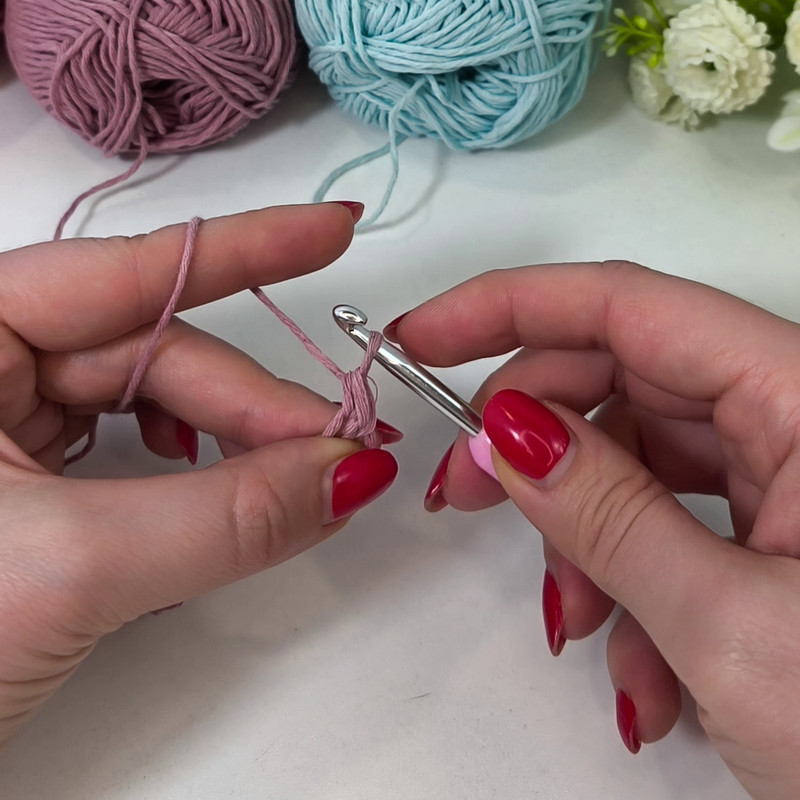
    Crochet and the nervous system are more connected than you might think. It isn’t just a hobby – it’s a form of gentle therapy for your mind and body. When your hands fall into the rhythm of stitch after stitch, something deeper happens inside you: your nervous system slows down, your breathing evens out, and your mind becomes quieter. And this isn’t just how it feels — research now explains why.

    Crochet and the Parasympathetic Nervous System

    Repetitive, rhythmic activities like crochet stimulate the parasympathetic nervous system — often called the “rest and digest” mode. This calms the body, lowers heart rate and blood pressure, and counters the effects of stress hormones like cortisol (Henry Ford Health). Neurologists compare this state to meditation or mindfulness practices, where the brain moves into a “flow state” — a natural mental reset that promotes emotional balance.

    If you’re new to crochet and want to experience these calming effects, start with our crochet for beginners guide.

    What the Numbers Say

    The mental health benefits of crochet aren’t just anecdotal. One of the largest surveys on this topic, with 8,391 participants from 87 countries, found that 89.5% of crocheters felt calmer, 82% felt happier, and 74.7% felt more useful after crocheting (Burns & Van Der Meer, 2021). Even more impressive, the study recorded a jump in average mood score from 4.19 to 5.78 on a 7‑point scale after a crochet session — a statistically significant change.
    Another study reported that 85% of people felt more relaxed, 81% experienced less tension, and 57% reported reduced anxiety thanks to crochet (University of Wollongong study). These numbers echo what many of us already know intuitively — crochet has the power to soothe both body and mind.

    How Crochet Affects the Nervous System: What Science Says

    A Mindful, Meditative Practice

    Articles in iScience Magazine and The Guardian describe crochet as a “gateway to mindfulness,” highlighting that 82% of crafters report feeling happier after creative sessions (iScience Magazine, The Guardian). This meditative state — where your thoughts quiet and your hands simply work — allows your brain to release “feel‑good” chemicals like serotonin and dopamine, helping untangle stress one loop at a time.

    Crochet as Nervous System Care

    If you’ve ever felt lighter, calmer, or more centered after picking up your hook, that’s your nervous system responding. Science is showing us what crocheters have always known: small, rhythmic movements can bring big emotional relief. So the next time life feels overwhelming, remember — each stitch you make is more than a craft. It’s a simple, powerful way to care for your mind and body.

  • 5 Crochet Mistakes (and How to Avoid Them)

    5 Crochet Mistakes (and How to Avoid Them)

    Crochet mistakes are more common than you might think. Starting your crochet journey can be exciting but also overwhelming. As a beginner, it’s natural to make errors, but recognizing and correcting them early will make your experience much smoother. In this guide, we’ll cover the five most common mistakes and how to fix them so you can crochet with confidence.

    1. Holding the Hook and Yarn Incorrectly

    One of the first challenges beginners face is finding a comfortable way to hold their hook and yarn. If you grip too tightly, your hands can tire quickly, and if you hold too loosely, your stitches may be uneven.

    How to Fix It:

    ✔ Experiment with different grips, such as the pencil grip or knife grip, to find what feels most natural.
    ✔ Keep a relaxed hold on the yarn to maintain even tension.
    ✔ Practice slow, deliberate movements until holding the hook feels comfortable.

    2. Uneven Tension in Stitches

    Tension refers to how tightly or loosely you pull your yarn while crocheting. Uneven tension can lead to stitches that are too tight and difficult to work into, or too loose, creating a sloppy appearance.

    How to Fix It:

    ✔ Maintain consistent yarn placement over your fingers.
    ✔ Practice simple stitches repeatedly to develop muscle memory.
    ✔ If your stitches are too tight, try using a larger hook; if too loose, try a smaller hook.

    3. Skipping or Adding Extra Stitches

    Many beginners unknowingly add or skip stitches, which results in uneven edges and an incorrect stitch count.

    How to Fix It: ✔ Always count your stitches at the end of each row.
    ✔ Use stitch markers to mark the first and last stitch of each row.
    ✔ Follow patterns closely, especially when learning new stitches.

    crochet mistakes for beginners

    4. Not Practicing Basic Stitches Enough

    Jumping into complex patterns too soon can lead to frustration. Mastering the basic stitches—single crochet, half-double crochet, and double crochet—will set a strong foundation for future projects.

    How to Fix It:

    ✔ Spend time practicing basic stitches before moving on to advanced techniques.
    ✔ Work on small projects like dishcloths or coasters to refine your skills.
    ✔ Follow step-by-step tutorials to reinforce stitch mechanics.

    5. Not Weaving in Ends Properly

    After finishing a project, leaving yarn ends unsecured can cause stitches to unravel over time.

    How to Fix It:

    ✔ Use a tapestry needle to weave the yarn tail back and forth through stitches.
    ✔ Avoid cutting the yarn too short—leave at least 5-6 inches for weaving.
    ✔ If needed, secure ends with a small knot to ensure durability.

    Final Thoughts

    Mistakes are a natural part of the learning process, but by identifying and correcting these common errors, you’ll build confidence and improve your skills faster. The key to successful crocheting is patience, practice, and enjoying the journey!

    For more crochet stitch guides and tutorials, check out Yarnspirations.

    For more beginner-friendly crochet tutorials, expert tips, and inspiration, download our PDF book, Squares of Serenity, featuring 5 beginner-friendly crochet square patterns and guided instructions.

    Happy Crocheting! 🧶